
 English
 French
 Spanish
 Russian
 Arabic
 Italy
Italy
Beijing, the capital of the People's Republic of China, is an ancient capital city with over 3,000 years of city-building history and more than 800 years of history as a national capital. Here is a concise introduction:
Historical Heritage
Bginning as the Ji City of the Yan State in the Western Zhou Dynasty, Beijing successively served as Nanjing of the Liao Dynasty, Zhongdu of the Jin Dynasty, Dadu of the Yuan Dynasty, and Beijing of the Ming and Qing Dynasties, before becoming the capital of New China. World cultural heritage sites such as the Forbidden City, Temple of Heaven, and the Great Wall bear witness to the brilliance of Chinese civilization.
Economic Structure
As the nation's political center, cultural center, international exchange center, and scientific and technological innovation center, Beijing's GDP exceeded 4.3 trillion yuan in 2023, with the tertiary industry accounting for over 80%. Zhongguancun Science Park, Financial Street, and the CBD constitute the core economic engines, with the digital economy and high-tech industries developing vigorously.
Humanistic Features
With a permanent population of over 21 million, Beijing gathers elites from all ethnic groups across the country. It is densely populated with higher education resources, possessing top universities such as Tsinghua and Peking University, with academicians of the two academies accounting for nearly half of the national total. Peking Opera, cross-talk, hutong culture, and modern art blend together to form a unique Beijing-style culture.
Cultural Characteristics
- Ancient Capital Charm: Central Axis heritage application, courtyard house clusters, imperial garden system.
- Artistic Highlands: National Centre for the Performing Arts, Palace Museum, 798 Art Zone.
- Innovation Vitality: Leading globally in the number of unicorn companies, with a strong "mass entrepreneurship and innovation" atmosphere.
- International Window: The city with the most foreign embassies in China, the preferred venue for major state affairs.
Beijing continues to write a new chapter for a great nation's capital through the dialectical unity of "capital" and "city," in the tension between tradition and modernity.
1. The Palace Museum (Forbidden City)
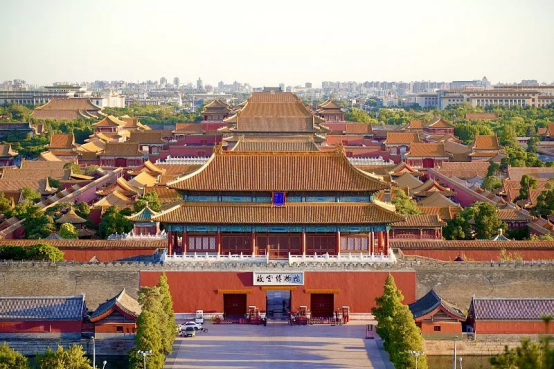
Located at the center of Beijing's central axis, it was the imperial palace of the Ming and Qing Dynasties, formerly known as the Forbidden City. Construction began in the 4th year of Yongle in the Ming Dynasty (1406) and was completed in the 18th year of Yongle (1420), taking fourteen years. It covers an area of approximately 720,000 square meters, with a building area of about 150,000 square meters, comprising over seventy palaces of various sizes and more than nine thousand rooms. The Palace Museum is centered on the three great halls of Taihe, Zhonghe, and Baohe, following the layout principle of "front court, rear chambers, left ancestral temple, right altar of earth and grain" in strict accordance with ancient Chinese palace architecture. In 1925, the Palace Museum was established, housing over 1.8 million cultural relics, making it China's largest museum of ancient culture and art. It was listed as a World Cultural Heritage site by UNESCO in 1987.
2. Tiananmen Square
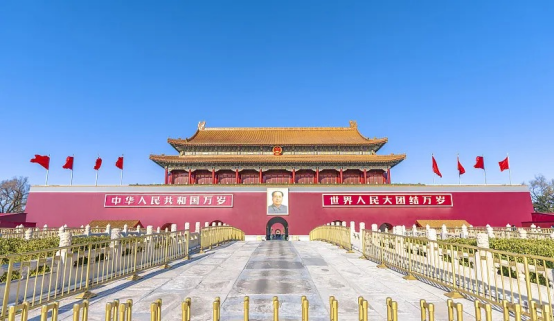
Located in the center of Beijing, it is 880 meters long from north to south and 500 meters wide from east to west, covering an area of 440,000 square meters, making it one of the largest city squares in the world. The square extends from Tiananmen in the north to Zhengyang Gate in the south, from the National Museum of China in the east to the Great Hall of the People in the west. Tiananmen was originally the main gate of the imperial city during the Ming and Qing Dynasties, first built in the 15th year of Yongle in the Ming Dynasty (1417), initially named Chengtian Gate, and renamed Tiananmen after reconstruction in the 8th year of Shunzhi in the Qing Dynasty (1651). The square area includes important structures such as the Monument to the People's Heroes and the Mausoleum of Mao Zedong, serving as the venue for major celebrations, gatherings, and diplomatic activities of the People's Republic of China.
3. The Great Wall (Badaling Section)
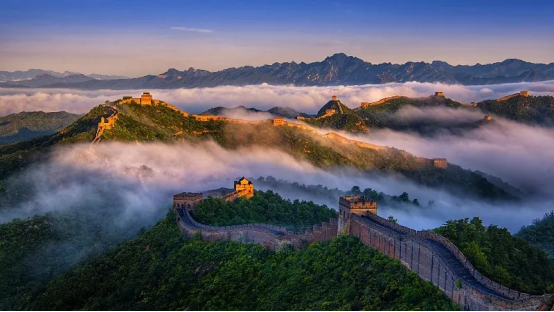
Badaling Great Wall is located in Jundu Mountain, Yanqing District, Beijing, a pass of the Ming Great Wall and an important component of the Great Wall. Built in the 18th year of Hongzhi in the Ming Dynasty (1505), it was subsequently repaired and expanded through successive dynasties. This section of the Great Wall occupies a commanding position with steep terrain. The wall is constructed with giant granite stone slabs and bricks, with an average base width of about 6.5 meters and a top width of about 5.8 meters, wide enough for five horses to ride abreast. Badaling Great Wall was an important northern barrier for the capital in the Ming Dynasty and a typical representative of ancient military defense engineering. It was listed as a national key cultural relic protection unit in 1961 and included in the World Cultural Heritage as part of the Great Wall in 1987.
4. Summer Palace (Yiheyuan)
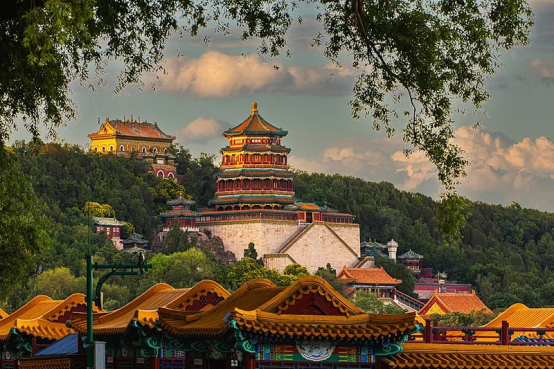
Located in the western suburbs of Beijing, it was a royal garden during the Qing Dynasty, formerly known as Qingyi Garden. Construction began in the 15th year of Qianlong in the Qing Dynasty (1750). It was burned down by the Anglo-French Allied Forces in the 10th year of Xianfeng (1860), rebuilt in the 14th year of Guangxu (1888), and renamed the Summer Palace. The park covers an area of about 2.9 square kilometers, with water surface accounting for about three-quarters. The garden is based on Kunming Lake and Longevity Hill, adopting Jiangnan garden design techniques, and pavilions, terraces, and towers are built according to the terrain. Main buildings include the Hall of Benevolence and Longevity, the Hall of Joyful Longevity, the Hall of Jade Billows, the Tower of Buddhist Incense, and the Hall of Dispelling Clouds. The Long Corridor is 728 meters long, with over 8,000 painted decorations. It was listed as a World Cultural Heritage site in 1998.
5. Temple of Heaven Park
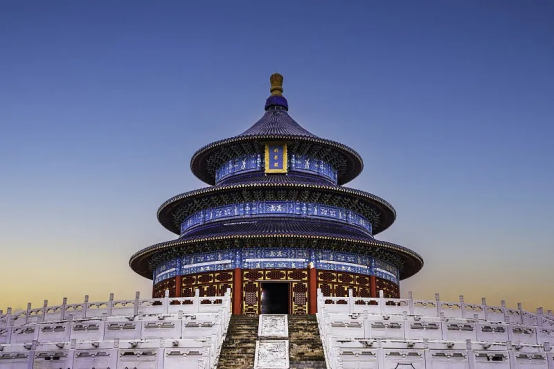
Located in Dongcheng District, Beijing, it was the place where emperors of the Ming and Qing Dynasties worshipped heaven and prayed for good harvests. Construction began in the 18th year of Yongle in the Ming Dynasty (1420), and it was rebuilt and expanded during the Jiajing and Qianlong periods of the Ming and Qing Dynasties. The total area is about 2.73 million square meters, divided into inner and outer altars, with main buildings concentrated in the inner altar. The altar walls are square in the south and round in the north, symbolizing heaven and earth. The Hall of Prayer for Good Harvests is a triple-eaved circular hall, 38 meters high and 32.72 meters in diameter, with a roof covered with blue glazed tiles representing heaven. The Circular Mound Altar is where the emperor worshipped heaven on the winter solstice, consisting of three layers of circular stone platforms paved with aiye bluestone. The Echo Wall is a circular wall built using the principle of sound wave reflection. It was listed as a national key cultural relic protection unit in 1961 and as a World Cultural Heritage site in 1998.
6. Old Summer Palace (Yuanmingyuan) Ruins Park
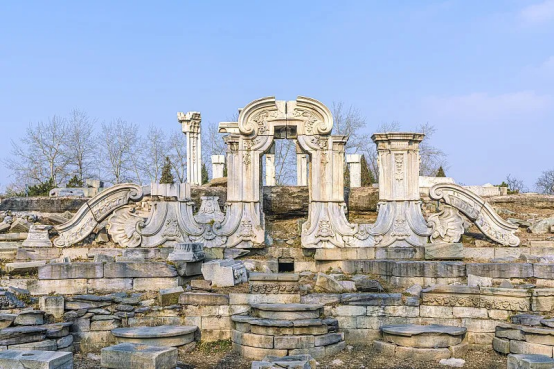
Located in Haidian District, Beijing, it was originally a large royal garden of the Qing Dynasty, consisting of three gardens: Yuanmingyuan, Changchunyuan, and Qichunyuan, hence also known as the Yuanming Three Gardens. Construction began in the 48th year of Kangxi in the Qing Dynasty (1709), and it was expanded through five emperors from Yongzheng to Xianfeng, covering about 350 hectares. The garden focused on water scenery, featuring both traditional Chinese architecture and European-style building complexes such as the Western Mansions, once praised as the "Garden of Gardens." In the 10th year of Xianfeng (1860), it was looted and burned by the Anglo-French Allied Forces, and further damaged by the Eight-Nation Alliance in the 26th year of Guangxu (1900). Existing ruins include stone carving remnants of the Western Mansions, the Grand Waterworks, and the Distant View Pavilion. It was listed as a national key cultural relic protection unit in 1988.
7. Beihai Park
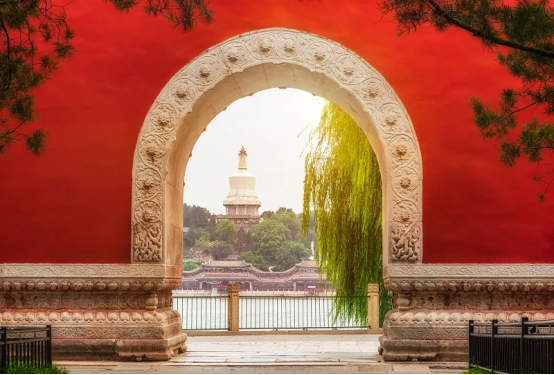
Located in the central area of Beijing, it is one of the oldest and most complete existing royal gardens in China. Construction began in the Liao Dynasty, with the Daining Palace built in the 19th year of Dading in the Jin Dynasty (1179). It was expanded through the Yuan, Ming, and Qing Dynasties to its present scale. The entire park covers about 68.2 hectares, with water surface accounting for more than half. Qionghua Island is the center of the park, with the White Dagoba built in the 8th year of Shunzhi in the Qing Dynasty (1651), a Tibetan-style Lama pagoda 35.9 meters high. The east bank features the Painted Boat Studio and Haopujian, while the north bank includes the Nine-Dragon Wall, Iron Shadow Wall, and Five-Dragon Pavilion. The Nine-Dragon Wall was built in the 21st year of Qianlong in the Qing Dynasty (1756), a double-sided glazed screen wall. It was listed as a national key cultural relic protection unit in 1961.
8. Prince Gong's Mansion
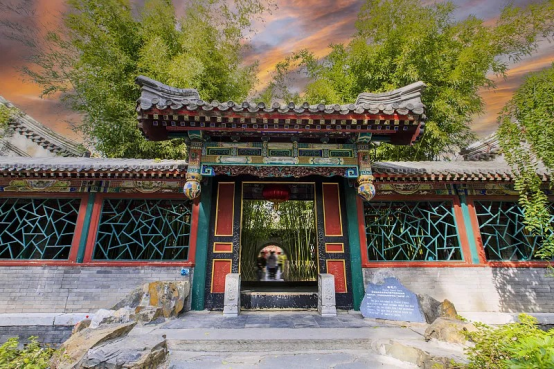
Located in Xicheng District, Beijing, it is the largest princely mansion complex of the Qing Dynasty. Formerly the residence of the powerful official Heshen during the Qianlong period, it was confiscated by the Imperial Household Department after Heshen was ordered to commit suicide in the 4th year of Jiaqing (1799). In the 1st year of Xianfeng (1851), it was bestowed upon Prince Gong Yixin, hence the name Prince Gong's Mansion. The mansion covers about 60,000 square meters, divided into the residence and garden sections, with over thirty building complexes. The architectural layout is divided into east, central, and west routes, with the main buildings of the central route being the Silver Peace Hall and the Hall of Joyful Music. The garden, named Cuijin Garden, covers about 28,000 square meters, containing buildings such as the Bat Hall, Anshan Hall, and Grand Theater Building. It was listed as a national key cultural relic protection unit in 1982.
9.Nanluoguxiang
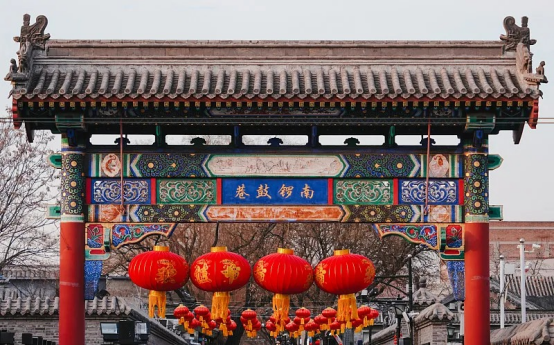
Located in Dongcheng District, Beijing, it is one of the oldest neighborhoods in Beijing, first built in the Yuan Dynasty. It is 787 meters long and 8 meters wide, running north-south. The street pattern completely preserves the historical texture of the "li-fang system" from Dadu of the Yuan Dynasty, with eight hutongs arranged in a fishbone pattern on each side. The area originally contained numerous historical buildings including princely mansions, residences, and temples, such as the Sengge Rinchen Princely Mansion, the former residence of Jin Yunpeng, and the former residence of Qi Baishi. Hutong names mostly formed in the Ming Dynasty, such as Ju'er Hutong, Mao'er Hutong, and Yu'er Hutong. This area is important physical material for studying Beijing's traditional urban layout and residential architecture.
10. National Stadium (Bird's Nest) and National Aquatics Center (Water Cube)
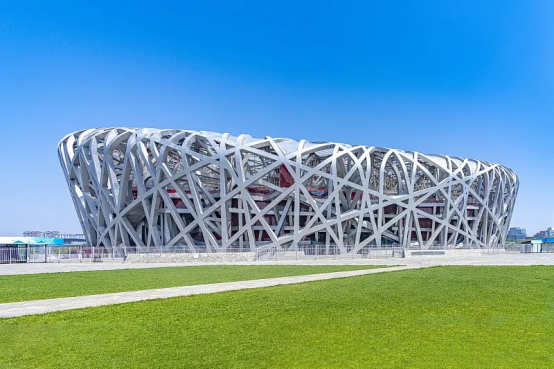
Located in the Beijing Olympic Park, they were the main venues for the 2008 Beijing Olympics. The National Stadium was designed by Herzog & de Meuron in collaboration with Chinese architect Li Xinggang and others, with a building area of 258,000 square meters and a capacity of 91,000 spectators. The building structure uses steel truss weaving, with an appearance resembling a bird's nest. The National Aquatics Center has a building area of 79,000 square meters and a capacity of 17,000 spectators, with an exterior facade using ETFE membrane material to create a blue bubble effect. The two buildings represent the design level and technical achievements of sports architecture in the early 21st century.
11. Yonghe Temple (Lama Temple)
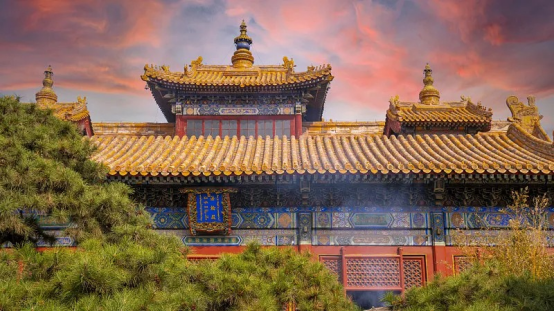
Located in Dongcheng District, Beijing, it is the largest and highest-ranking Tibetan Buddhist temple in the Beijing area. Construction began in the 33rd year of Kangxi in the Qing Dynasty (1694), originally as the residence of the fourth son of Emperor Kangxi, Yinzhen, called the Yong Prince's Mansion. In the 3rd year of Yongzheng (1725), it was converted into an imperial palace, called Yonghe Palace. In the 9th year of Qianlong (1744), it was converted into a Lama temple. The building complex faces south, divided into east, central, and west routes, with seven courtyards in the central route and five halls. Main buildings include the Hall of Heavenly Kings, the Yonghe Palace Main Hall, the Yongyou Hall, the Falun Hall, and the Wanfu Pavilion. The Wanfu Pavilion houses a Maitreya Buddha statue carved from white sandalwood, 26 meters high. The Falun Hall has a cross-shaped plan, a combination of Tibetan and Han architectural styles. It was listed as a national key cultural relic protection unit in 1961.
12. Jingshan Park
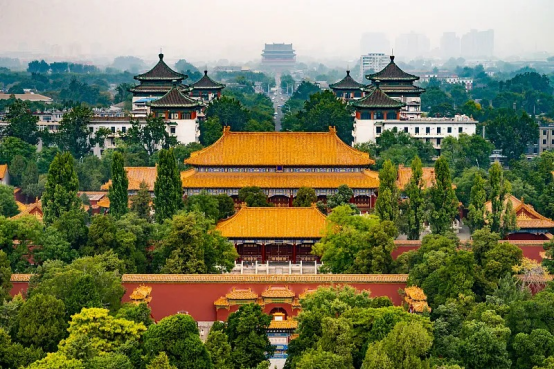
Located in Xicheng District, Beijing, it is at the center point of Beijing's north-south central axis. It was originally the imperial garden of the Yuan, Ming, and Qing Dynasties. The park covers 23 hectares, with the main peak 43 meters high, formerly called Coal Hill. During the Yongle period of the Ming Dynasty, when building the Forbidden City, coal was piled here, later renamed Wansui Hill. In the 12th year of Shunzhi in the Qing Dynasty (1655), it was renamed Jingshan. Five pavilions are built on the hilltop, with the Wanchun Pavilion in the center being a triple-eaved yellow glazed tile four-corner pointed roof, housing Buddha statues. Jingshan is also where Emperor Chongzhen of the Ming Dynasty, Zhu Youjian, committed suicide. The park still contains buildings such as the Shouhuang Hall, Guande Hall, and Huguo Zhongyi Temple. Jingshan is an excellent place to overlook the entire view of the Forbidden City and Beijing's central axis scenery.
13. Wangfujing Street
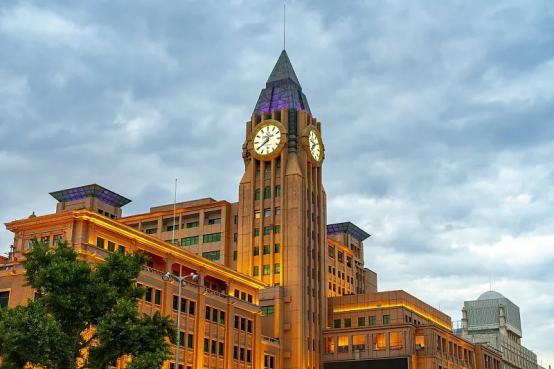
Located in Dongcheng District, Beijing, it extends from East Chang'an Street in the south to the National Art Museum of China in the north, with a total length of about 1,818 meters. The name originated in the Ming Dynasty, derived from a princely mansion and a sweet water well that once existed on the street. After the police department was established in the 31st year of Guangxu in the Qing Dynasty (1905), it gradually developed into a commercial district. Both sides of the street feature traditional buildings such as the department store, arts and crafts store, Xinhua Bookstore, and Catholic church. Wangfujing Catholic Church, also known as East Church, was built in the 12th year of Shunzhi in the Qing Dynasty (1655), in Baroque architectural style. The Wangfujing Paleolithic Cultural Site Museum is built underground on the street, displaying late Paleolithic cultural remains. Wangfujing Street represents Beijing's traditional commercial district.