Introduction to Baoding City and Its Famous Scenic Spots
City Introduction
Located in the core hinterland of the Beijing-Tianjin-Hebei region and adjacent to Beijing and Xiongan New Area, Baoding in Hebei Province is a nationally renowned historical and cultural city, reputed as the “Gateway to the Capital and Key Barrier of the Imperial Capital”. Its name originated in the Yuan Dynasty, meaning “defending the capital and stabilizing the nation”. With a millennial history, it has long served as a vital political, military and cultural stronghold in North China. Baoding boasts a profound cultural heritage. The ancient Nanzhuangtou Site witnesses ten thousand years of human civilization, while the Warring States Period Yandu Site embodies the splendid Yanzhao culture, fostering the enduring spirit of righteousness, loyalty and heroism of the Yanzhao people. Since the Kangxi reign of the Qing Dynasty, Baoding had long been the provincial capital of Zhili Province and the residence of the Zhili Governor, occupying a core position in North China for nearly 300 years and serving as a living carrier of the history of Zhili in the Qing Dynasty.
Baoding features diverse and profound cultures, including ancient provincial government culture, academy heritage, red revolutionary culture and landscape humanity. The Qing Dynasty Lianchi Academy, famous across northern China, cultivated numerous talents and pioneered modern education in northern China. Baoding Military Academy earned worldwide fame and nurtured countless military and political elites, profoundly influencing the modern historical process of China. In modern times, Baoding is a prestigious red hotbed in North China, where the Langya Mountain Spirit, Baiyangdian anti-Japanese culture and the red heritage of the Work-Study Program in France converge, forging the city’s loyal, courageous and sincere temperament. Endowed with stunning natural scenery, the city is bordered by the Taihang Mountains to the west and adorned with the rippling Baiyangdian Lake, integrating magnificent mountains and millennial humanities. In the context of the coordinated development of the Beijing-Tianjin-Hebei region, modern Baoding inherits the time-honored Yanzhao spirit, Zhili official culture and red heritage, evolving into a vibrant modern high-quality ancient city with profound historical roots.
Famous Scenic Spots in Baoding
1. Zhili Governor’s Office
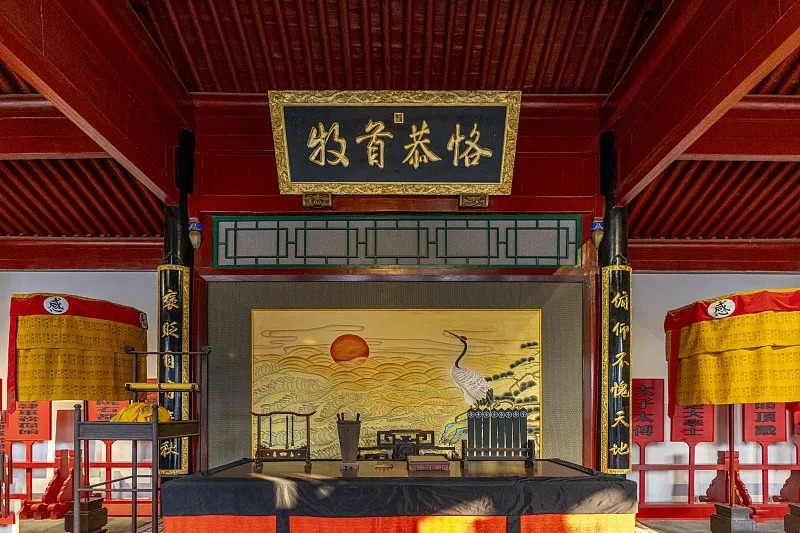
Located in the downtown area of Baoding, the Zhili Governor’s Office is the best-preserved and largest provincial government mansion of the Qing Dynasty in China. Reputed as “one governor’s mansion reflecting half of the Qing Dynasty’s history”, it bears the political, military, official and civilian history of the Zhili region spanning hundreds of years. Initially built in the Ming Dynasty and extensively renovated and expanded in the Qing Dynasty, it served as the core office of the Zhili Governor since the eighth year of the Kangxi reign and functioned as the highest military and political authority of Zhili Province through the reigns of Yongzheng, Qianlong and Jiaqing. As a critical barrier protecting the capital, the Zhili Governor held extraordinary power and status, governing the vital capital surrounding regions.
Strictly constructed in accordance with Qing Dynasty official mansion norms, the complex features a symmetrical south-north layout with layered and orderly courtyards. The primitive blue bricks and grey tiles present a solemn and dignified style, completely retaining the architectural layout and craftsmanship of Qing Dynasty official buildings. With well-defined functional areas including halls, side rooms, warehouses and private courtyards, the mansion houses a wealth of Qing Dynasty documents, official costumes, weapons and historical relics, truly restoring the political system, official norms and daily operations of provincial authorities in the Qing Dynasty. Renowned late Qing officials including Li Hongzhang, Zeng Guofan and Yuan Shikai once served here, implementing Westernization movements, managing river affairs, defending borders and rectifying official governance, leaving far-reaching historical impacts on modern China. As a precious ancient architectural relic, the Zhili Governor’s Office is a core base for studying Qing Dynasty official systems, Zhili history and capital governance culture, fully demonstrating the official culture of northern China and the profound political heritage of Yanzhao region.
2. Ancient Lotus Pond Garden
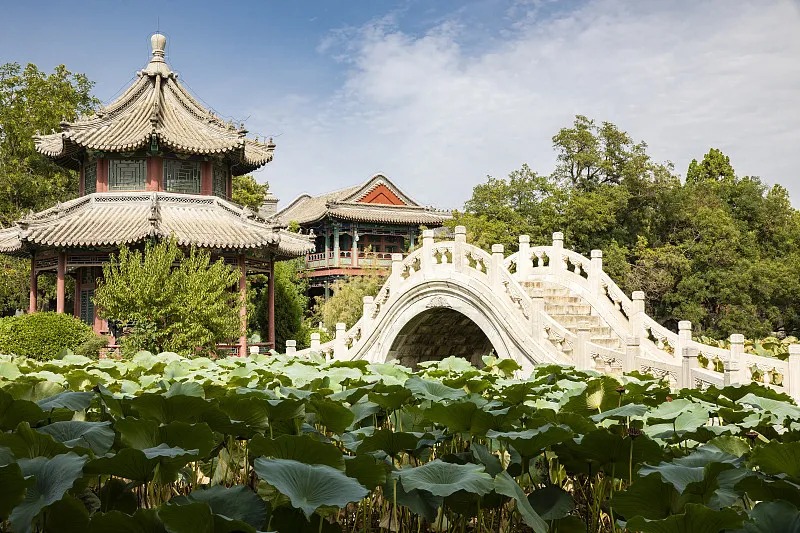
Situated in central Baoding, the Ancient Lotus Pond Garden was built in the Yuan Dynasty with a history of more than 800 years. As a famous classical garden in northern China, it combines the delicate elegance of Jiangnan gardens with the grand solemnity of northern courtyards. Together with the Zhili Governor’s Office, it forms the core cultural heritage of Baoding. Originally a private garden in the Yuan Dynasty, it was repeatedly expanded and renovated in the Ming and Qing dynasties, gradually developing into an official garden integrating leisure, academic lectures, book collection and political reception. In the Qing Dynasty, it became a favored resort for emperors staying during southern inspections and for literati to tour and compose poems.
Centered on the lotus pond, the garden features scattered pavilions, ancient bridges and lush woods, with classic architectures such as Zhuojin Pavilion, Linyi Pavilion and Guanlan Pavilion surrounding the water, offering changing and serene scenery at every step. It collects numerous stone inscriptions, calligraphy works and precious ancient books and paintings from successive dynasties, sustaining an 800-year scholarly heritage. The prestigious Lianchi Academy of the Qing Dynasty was located within the garden. As a top-tier academy in northern China, it gathered distinguished masters and cultivated numerous talents, pioneering the prosperity of modern education in northern China. Integrating the natural artistic conception of landscape gardens with the humanistic spirit of academic education, the Ancient Lotus Pond Garden is a rare dual-culture scenic spot featuring both garden aesthetics and scholarly heritage in North China, witnessing Baoding’s millennial tradition of valuing education and cultivating talents.
3. Baoding Military Academy Memorial Hall
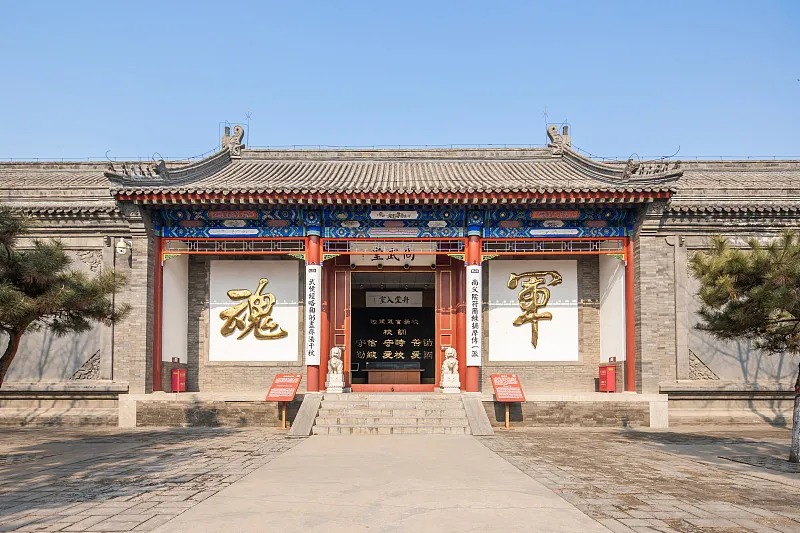
Built on the former site of Baoding Military Academy, the Baoding Military Academy Memorial Hall is an important historical landmark of modern Chinese military education, known for the reputation that “Baoding Military Academy records half of China’s modern military history”. Founded in the late Qing Dynasty, it was China’s first formal army military academy, pioneering systematic modern military education and filling the gap in modern military talent training in the late Qing Dynasty. Operating continuously in the Republic of China era, it developed into the largest and most well-structured military institution in modern China after decades of development.
The academy nurtured more than 1,800 outstanding military and political talents, including Chiang Kai-shek, Bai Chongxi and Ye Ting, covering numerous senior generals of both the Kuomintang and the Communist Party of China. These elites profoundly influenced major modern historical events such as the Northern Expedition, the War of Resistance against Japanese Aggression and the Chinese Liberation War. Through abundant cultural relics, image materials, historical documents and scene restoration, the memorial hall comprehensively displays the academy’s development history, teaching system and educational achievements, vividly reproducing the reform and progress of modern Chinese military education. The former site adopts a Sino-Western integrated architectural style popular in the late Qing and early Republic of China periods, presenting a simple, solemn and profound demeanor. Bearing the aspiration of strengthening the military and saving the country in modern China, the academy embodies the spirit of self-improvement and national dedication, serving as an important humanistic and educational base for researching modern Chinese military history and red revolutionary history.

 English
 French
 Spanish
 Russian
 Arabic
 Italy
Italy