Introduction to Mudanjiang City
Mudanjiang, also known as the Snow City, is located in the southeast of Heilongjiang Province. It serves as the regional central city in southeast Heilongjiang, a key node city in the Northeast Asian Economic Circle, and the core bridgehead for China's border opening to Russia. The city gets its name from the Mudanjiang River, one of the largest tributaries of the Songhua River, which runs through the urban area. Endowed with exceptional ecological resources and a profound historical heritage, it has long been honored as the "Jiangnan Beyond the Great Wall" and "Land of Fish and Rice", and is recognized as an Excellent Tourist City and National Garden City of China.
The cultural lineage of Mudanjiang can be traced back 4,000 years. It was the ancestral homeland of the Sushen people, the ancestors of the Manchu ethnic group, where ancestors lived and multiplied as early as the Shang and Zhou dynasties, with fishing and hunting civilization lasting for thousands of years. In the Tang Dynasty, the Mohe people established the prosperous Bohai Kingdom here, with its capital set at Shangjing Longquanfu, creating the "Flourishing Haidong Kingdom" renowned across Northeast Asia, and becoming a core hub for cultural exchanges and commercial trade in the region at that time. In the Qing Dynasty, it was under the jurisdiction of the Ningguta General, serving as a military and political town for frontier governance in Northeast China. The farming culture brought by exiles from the Central Plains deeply integrated with the local fishing and hunting culture, laying the foundation for the city's diverse cultural identity. In modern times, with the construction of the Chinese Eastern Railway, the collision and integration of Chinese and Russian cultures here shaped the city's unique open and inclusive temperament.
This is also a red land engraved with heroic marks, the main battlefield of the Northeast Anti-Japanese United Army in Northeast China. The heroic feat of the Eight Heroines Who Drowned Themselves in the River and the legendary story of Yang Zirong Outsmarting the Weihu Mountain were both born here, with red genes deeply integrated into the city's bloodline. Today, with "the magnificent scenery of Jingpo Lake and the snowy forest of Weihushan Mountain" as its core cultural and tourism business cards, Mudanjiang integrates the historical culture of the Bohai Kingdom, border exotic culture, ice and snow folk culture, and red revolutionary culture. It is a famous northern city that combines the elegance of mountains and rivers with profound humanistic heritage, as well as ice and snow wonders with the warmth of local life.
Introduction to Famous Scenic Spots in Mudanjiang
1. Jingpo Lake Scenic Area
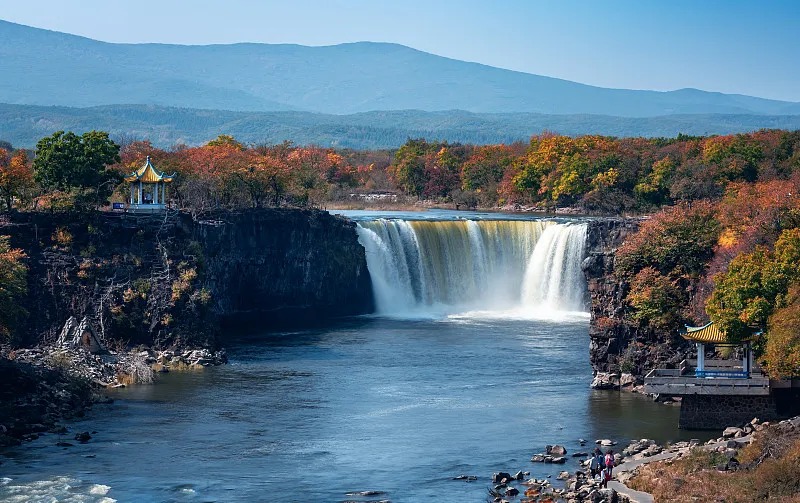
Located in Ning'an City under the jurisdiction of Mudanjiang, Jingpo Lake Scenic Area is a National 5A-level Tourist Attraction and World Geopark. It is the largest alpine barrier lake in China and the second largest in the world, and is undoubtedly the core cultural and tourism business card of Mudanjiang. Formed by a volcanic eruption about 10,000 years ago, when lava blocked the course of the Mudanjiang River, this rare natural wonder was already recorded in the Book of Han·Geography. After thousands of years of name changes, it was finally named Jingpo Lake for its clear and mirror-like water. The scenic area covers a vast total area, consisting of three major sections: the Hundred-Li Long Lake, the Crater Primeval Forest, and the Site of Shangjing Longquanfu of the Bohai Kingdom. Centered on lake and mountain scenery, it integrates volcanic geological wonders, thousand-year history and culture, and Northeast folk customs, making it a comprehensive scenic spot integrating summer vacation, health preservation, sightseeing, research and leisure.
The core landscape of the scenic area is Diaoshuilou Waterfall, the largest basalt waterfall in the world and one of China's Top Ten Famous Waterfalls. During the summer flood season, the width of the waterfall increases sharply, with surging lake water pouring down from the cliff, shaking the valley with magnificent momentum, and rainbows often span across the water mist, creating a stunning scenery. In winter, it condenses into an ice waterfall wonder tens of meters high, with clear blue ice and jade-like structures, known as a unique masterpiece of northern China. Around the lake area, there are more than a dozen dormant volcanic craters, and the underground forest formed by thousands of years of growth inside the craters has created a geological miracle of "forests growing on volcanic craters", which is a natural treasure house for volcanic geological research. Jingpo Lake has a profound cultural heritage. It is a traditional fishing and hunting holy land for the ancestors of the Manchu people, with a thousand-year folk legend of Hongluonv passed down. It was already the core of regional culture in the Bohai Kingdom period of the Tang Dynasty, with a large number of sites and monuments of the Bohai Kingdom preserved along the lake. Today, Jingpo Lake has different scenery in four seasons, with mountain flowers in spring, blue lake in summer, red leaves in autumn, and ice and snow in winter, fully showing the unique charm of "Jiangnan Beyond the Great Wall". It has also become a living inheritance place for the fishing and hunting culture of Northeast China and the Bohai Kingdom culture.
2. China Snow Town (Snow Town National Forest Park)
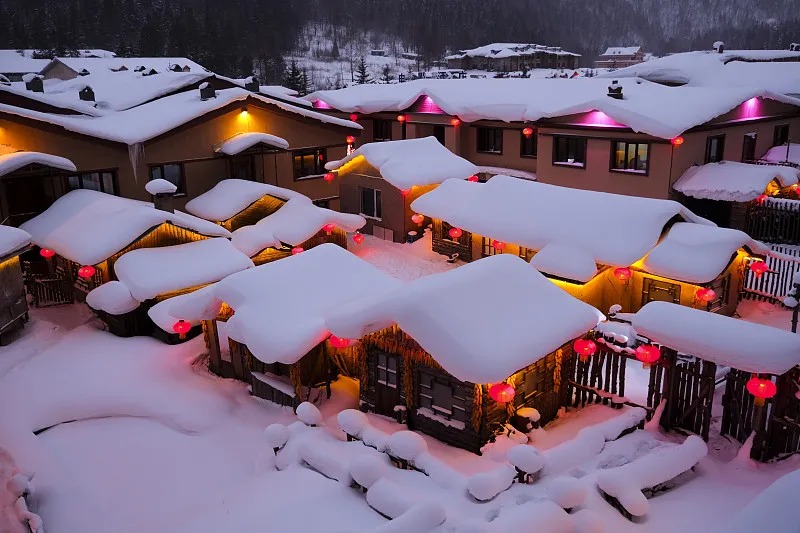
China Snow Town, officially named Snow Town National Forest Park, is located in Shuangfeng Forest Farm of Dahailin Forestry Bureau in Hailin City under Mudanjiang. It is a National 4A-level Tourist Attraction, a benchmark destination for ice and snow tourism in China, and a well-known ice and snow cultural and tourism business card of Mudanjiang nationwide. Located at the intersection of Zhangguangcai Ridge and Laoye Ridge of the Changbai Mountains, under the dual continuous influence of the warm and humid air flow from the Sea of Japan and the cold air from Lake Baikal, it has a long annual snow cover period, with the snow thickness consistently ranking the highest in China. The snow here is fine, dense and highly viscous, forming unique snow wonders such as natural snow mushrooms, snow cakes and snow eaves, known as "China's Snow Town, the World's Snow Scenery".
China Snow Town has a profound cultural heritage and unique folk customs, and is an important inheritance place of the Chuang Guandong (Braving the Northeast) culture. In the late Qing Dynasty and the early Republic of China, a large number of immigrants from Shandong and Hebei came here to make a living in the Northeast, relying on logging and hunting, took root and multiplied in the snowy forest, forming a unique folk custom of the Northeast forest area. The wooden keleng houses, heated brick bed dwellings, and cellars in the scenic area completely retain the traditional residential characteristics of the Northeast forest area, and the forest area work songs and logging gang culture have been passed down from generation to generation here. At the same time, it is also the core setting of the red classic Tracks in the Snowy Forest, where the legendary story of Yang Zirong's bandit suppression is widely circulated, with red culture deeply integrated with the forest folk culture. Today, in China Snow Town, the wooden houses on both sides of Xueyun Street are covered with thick snow, and under the illumination of red lanterns at night, it looks like a fairy tale world of ice and snow. There are a variety of folk experience projects such as snowmobiling, snow tubing, Northeast Yangko, and Errenzhuan (two-person song and dance duet). Many well-known film and television works have been shot here, making the name of China Snow Town famous at home and abroad. It has become a living carrier of the Northeast forest area culture, Chuang Guandong folk customs and red culture.
3. Site of Shangjing Longquanfu of the Bohai Kingdom
Located in Bohai Town of Ning'an City under Mudanjiang, the Site of Shangjing Longquanfu of the Bohai Kingdom is one of the first batch of National Key Cultural Relics Protection Units announced by the State Council in 1961. It is the capital site of the Bohai Kingdom in the Tang Dynasty, and one of the most complete and largest Tang Dynasty capital sites existing in China. It witnessed the hundred-year prosperity of the "Flourishing Haidong Kingdom" of the Bohai Kingdom, and is also the core material evidence of ancient civilization exchanges in Northeast Asia. The Bohai Kingdom was established by Da Zuorong, the leader of the Mohe people, in 698 AD. In 755 AD, Da Qinmao, the third king of the Bohai Kingdom, moved the capital here. The capital was completely built in accordance with the regulation of Chang'an City, the capital of the Tang Dynasty. It was one of the largest capitals in Northeast Asia at that time, larger than Nara City in Japan in the same period. During the 229 years of the Bohai Kingdom's existence, it was always the political, economic, cultural and commercial center of Northeast Asia, with frequent exchanges with the Tang Dynasty, Japan and Silla, and was extremely prosperous.
The overall pattern of the site is completely preserved, divided into three parts: the outer city, the inner city and the palace city. The outer city has a perimeter of more than ten kilometers, with dozens of lifang (residential blocks) distributed in the city, and crisscrossing streets, fully following the lifang system of the Tang Dynasty, and clearly restoring the construction pattern of the prosperous Tang capital. The palace city is located in the north of the inner city, with five existing palace foundation sites, and a clear and regular central axis layout, fully showing the regulation and bearing of the prosperous Tang architecture. The national treasure-level cultural relic, the Stone Lantern of the Bohai Kingdom, is preserved in the site, which is the only completely preserved stone carving work of the Bohai Kingdom period in China. Its exquisite carving technology integrates the Central Plains Buddhist art with the Northeast ethnic characteristics, and is the pinnacle of the Bohai Kingdom's culture and art. In the Xinglong Temple next to the site, there are also precious relics such as the Giant Stone Buddha from the Bohai Kingdom period. A large number of cultural relics such as Tang Dynasty bricks and tiles, pottery, and bronzes unearthed from the site have proved the in-depth integration of the Bohai Kingdom and the Central Plains culture. This thousand-year-old capital site is not only a historical witness of the effective governance of the border areas by the central government of the Tang Dynasty, but also a precious relic of the integration and coexistence of multi-ethnic cultures in China, carrying the profound memory of ancient civilization exchanges in Northeast Asia.
4. Hengdaohezi Russian-Style Town
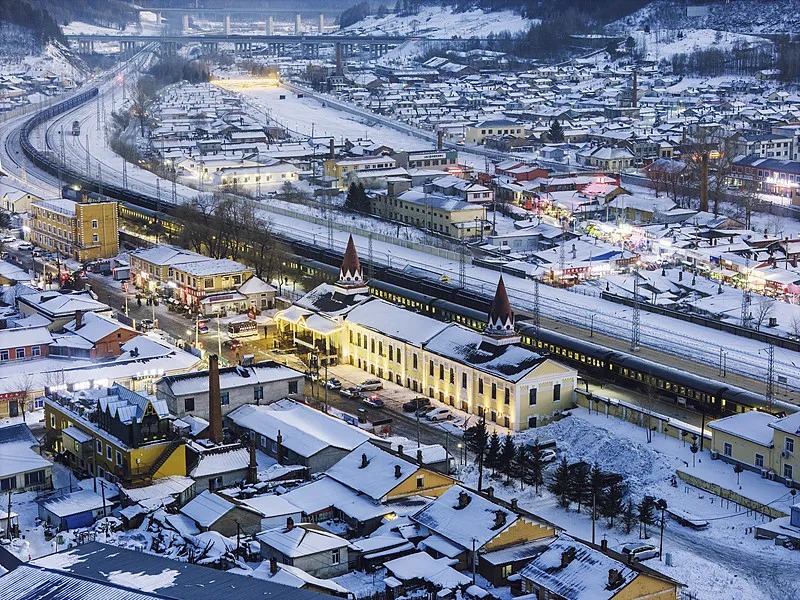
Located in Hailin City under Mudanjiang, Hengdaohezi Russian-Style Town is a National 4A-level Tourist Attraction and a National Key Cultural Relics Protection Unit. It won the UNESCO Asia-Pacific Heritage Award for Culture Heritage Conservation in 2018. It is the most complete and largest Russian-style town preserved along the Chinese Eastern Railway, and an important historical witness of the integration of Chinese and Russian cultures. The town was founded in 1897, rising with the construction of the Chinese Eastern Railway. It was once an important hub and construction command center of the railway. A large number of Russian engineers, railway workers and overseas Chinese settled here, leaving a large-scale and complete system of Russian-style buildings.
There are more than 200 century-old Russian buildings preserved in the town, covering various types such as Orthodox churches, railway roundhouses, officer apartments, wooden villas, and railway office buildings. It is a rare historical settlement in China that completely retains the modern Russian architectural system. Among them, the Church of the Presentation of the Blessed Virgin Mary is the only existing all-wooden Russian Orthodox Church in China, with exquisite construction technology, fully showing the essence of traditional Russian wooden architecture. The Chinese Eastern Railway Roundhouse is the largest fan-shaped railway roundhouse in Asia, with a unique architectural form, witnessing the development of China's modern railway industry. The town is located in the hinterland of Zhangguangcai Ridge, surrounded by mountains and vast forests. The colorful Russian-style gabled wooden houses are hidden among the mountains and forests, with a strong exotic atmosphere, known as "China's Museum of Russian Style". Relying on its profound historical heritage, it has also become a well-known oil painting village in China, where a large number of Chinese and Russian artists settle and create, forming a unique atmosphere of Sino-Russian art exchange. Today, Hengdaohezi Town is not only a living fossil of the history of the Chinese Eastern Railway, but also a vivid epitome of the integration of Chinese and Russian cultures. The century-old buildings complement the forest scenery, fully showing the unique charm of modern northeast border culture.
5. Weihushan National Forest Park
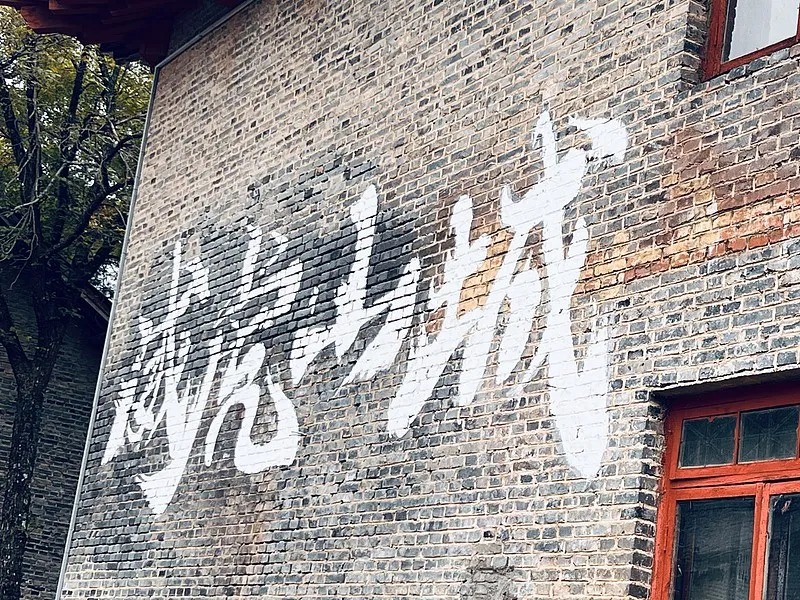
Weihushan (Tiger Power Mountain) National Forest Park is located in Hailin City under Mudanjiang, at the eastern foot of Zhangguangcai Ridge. It is a National 4A-level Tourist Attraction, and a well-known scenic spot centered on red bandit suppression culture, snowy forest scenery, and Northeast folk culture. It is widely known across the country for the story of "Outsmarting the Weihushan Mountain" in the red classic Tracks in the Snowy Forest. The park covers a vast total area with an extremely high forest coverage rate, with lush primitive Korean pine forests, spruces, firs and other trees, dotted with strange peaks and rocks, streams and waterfalls. It has different scenery in four seasons: blooming mountain flowers in spring, quiet forest in summer, colorful forests in autumn, and vast snowfield in winter, completely restoring the magnificent snowy forest scenery described in Tracks in the Snowy Forest.
Weihushan Mountain has a profound humanistic history and red cultural heritage. It was once an important guerrilla area of the Northeast Anti-Japanese United Army, and also the core battlefield of bandit suppression operations during the Liberation War. In the 1940s, the legendary story of heroic scout Yang Zirong penetrating deep into the snowy forest, breaking into the bandit den alone, outsmarting Weihushan Mountain, and capturing the bandit chieftain Zuoshandiao alive happened here, making Weihushan Mountain a well-known red landmark. The scenic area completely preserves many historical relics such as the Weihushan bandit den site, the place where Yang Zirong sacrificed his life, and the Erdaohezi bandit suppression site. The supporting Weihushan Film and Television City completely restores the towns, villages, bandit dens and other scenes during the snowy forest period, and has become the shooting location for many red-themed and northeast-themed film and television works. At the same time, it is also a traditional hunting ground for the ancestors of the Manchu people, where the traditional hunting culture, logging gang culture and folk culture of Northeast China are completely inherited. The Northeast Folk Village in the scenic area vividly shows the traditional residential buildings, folk customs and production and lifestyle of Northeast China. Today, Weihushan National Forest Park is a comprehensive scenic spot integrating red education, forest sightseeing, folk experience and film and television shooting, and has become an important carrier for inheriting the Northeast Anti-Japanese United Army spirit, bandit suppression red culture and Northeast folk culture.
6. Dongning Fortress Site
Located in Dongning City under Mudanjiang, the Dongning Fortress Site is a National Key Cultural Relics Protection Unit and a National Patriotic Education Demonstration Base. It is the largest military fortress complex built by the Japanese Kwantung Army in Northeast China during World War II, as well as the final battlefield of World War II. Known as the "Eastern Maginot Line", it is irrefutable evidence of the Japanese militarism's crimes of aggression against China, carrying a profound history of the War of Resistance against Japanese Aggression and red memory. Construction of the fortress began in 1934. To prepare for the military attack on the Soviet Union, the Japanese Kwantung Army forcibly recruited 170,000 Chinese laborers to build it over a period of ten years. The fortress complex has a front width of 110 kilometers and a depth of 50 kilometers, with 10 large underground fortresses, more than 40 permanent fortifications, and supporting facilities such as airports, barracks, hospitals, and ammunition depots. It was the largest military fortress complex in Asia at that time.
The core relics of the Dongning Fortress Site include the Xunshan Underground Fortress, Shenghongshan Fortress, and Madashan Fortress. Among them, the Xunshan Underground Fortress is the most completely preserved part at present. The total length of the underground fortress passage is more than 10,000 meters, with complete facilities such as command posts, ammunition depots, power generation rooms, kitchens, and clinics inside. The structure is complex and the project is huge, completely retaining the original appearance of the Japanese military fortifications. The Dongning Fortress Museum is built in the site, with a collection of more than 2,000 cultural relics from the Japanese invasion of China and more than 500 precious historical photos. Through scene restoration and physical display, it systematically exposes the heinous crimes of the Japanese army's invasion of China. The remains of Chinese laborers preserved here are direct evidence of the Japanese army's mutilation of the Chinese people. On August 30, 1945, the remaining Japanese troops stationed in the Dongning Fortress finally announced their surrender, making this place the official end of World War II. Today, the Dongning Fortress Site is not only an important material evidence for the study of World War II history and the history of Japan's invasion of China, but also an important position for inheriting the spirit of the War of Resistance against Japanese Aggression and carrying out patriotic education, witnessing the unyielding history of the Chinese people in resisting aggression, defending national dignity and world peace.
7. Memorial Sculpture of the Eight Heroines Who Drowned Themselves in the River
Located in Jiangbin Park in the urban area of Mudanjiang, the Memorial Sculpture of the Eight Heroines Who Drowned Themselves in the River is a National Patriotic Education Demonstration Base and a National Key Martyr Memorial Building Protection Unit. It was built to commemorate the eight female soldiers of the Northeast Anti-Japanese United Army who died heroically in the Wusihun River, a tributary of the Mudanjiang River, in 1938. It is the urban spiritual landmark of Mudanjiang, carrying the red culture and heroic spirit of the Northeast Anti-Japanese United Army. In October 1938, eight female soldiers of the Women's Regiment of the 5th Army of the Northeast Anti-Japanese United Army: Leng Yun, Hu Xiuzhi, Yang Guizhen, Guo Guiqin, Huang Guiqing, Wang Huimin, Li Fengshan, and An Shunfu, took the initiative to attract the main firepower of the Japanese army to cover the breakout of the main force of the Anti-Japanese United Army on the bank of the Wusihun River in Linkou County of Mudanjiang. When they ran out of ammunition and were surrounded, they resolutely stepped into the icy Wusihun River and died a heroic death, composing a magnificent heroic hymn.
The memorial sculpture was officially completed in 1988, designed by the famous sculptor Pan He. The whole sculpture is carved from granite, vividly reproducing the heroic image of the eight female soldiers supporting each other, facing death unflinchingly, and resolutely walking into the river. The sculpture is magnificent with lifelike character expressions, fully showing the unyielding integrity and heroic spirit of the revolutionary martyrs. Next to the sculpture, there is a supporting Memorial Hall of the Eight Heroines, which fully shows the life stories of the eight female soldiers and the arduous 14-year battle history of the Northeast Anti-Japanese United Army through precious cultural relics, historical photos, scene restoration and other forms. Today, the Memorial Sculpture of the Eight Heroines is not only the core symbol of Mudanjiang's red culture, but also an important carrier for inheriting the spirit of the Northeast Anti-Japanese United Army and promoting patriotism. Every year, a large number of tourists, students and people from all walks of life come to pay their respects. The deeds of the eight heroines have spanned time and space, becoming an eternal spiritual monument of the city.

 English
 French
 Spanish
 Russian
 Arabic
 Italy
Italy