Introduction to Hulunbuir City
Hulunbuir City, under the jurisdiction of Inner Mongolia Autonomous Region, gets its name from Hulun Lake and Buir Lake within its territory. Located in the northeast of Inner Mongolia, it stands at the border of China, Russia and Mongolia, and is the prefecture-level city with the largest land area in China. It has 8 national ports and a long border line, serving as an important bridgehead for China's northward opening up. The Greater Khingan Range runs through the whole territory, connecting the vast grassland in the west and the boundless forest sea in the east. With crisscrossing rivers and densely distributed lakes, it is home to the Hulunbuir Grassland, one of the four largest grasslands in the world. Endowed with exceptional ecological endowments, it has long been honored as the "Jasper of Northern China" and "Pearl of the Grassland".
It is known as "the historical cradle for the growth of nomadic peoples in northern China", with a civilization history stretching for thousands of years. As early as the Paleolithic Age, the Zhalainuoer people lived and multiplied here. From the Donghu, Xiongnu, Xianbei to the Khitan, Jurchen and Mongolian, more than a dozen nomadic tribes have left their footprints here. The Tuoba Xianbei walked out of the Gaxian Cave here, entered the Central Plains and established the Northern Wei Dynasty. Genghis Khan trained his troops here, unified the Mongolian tribes, and started the magnificent journey of the Mongol Empire, where nomadic civilization has accumulated a profound historical heritage.
More than 40 ethnic groups live here, including Mongolian, Daur, Ewenki, Oroqen and Russian ethnic groups, with multi-ethnic cultures integrating and coexisting. Dozens of national intangible cultural heritages such as the Nadam Fair, Ovoo Worship, reindeer herding culture, and the Russian Ethnic Group's Pascha Festival are inherited in a living state. Today, with grasslands, forests, wetlands, ice and snow, and border customs as its core cultural and tourism business cards, Hulunbuir is an Excellent Tourist City of China and an important ecological security barrier in northern China. It is a famous northern city with magnificent mountains and rivers, profound humanistic heritage, and rich ethnic customs.
Introduction to Famous Scenic Spots in Hulunbuir
1. Hulunbuir Grassland
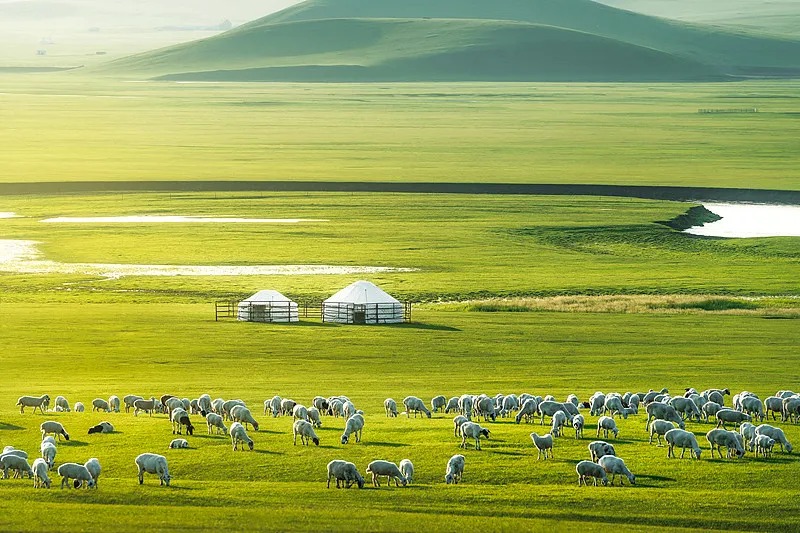
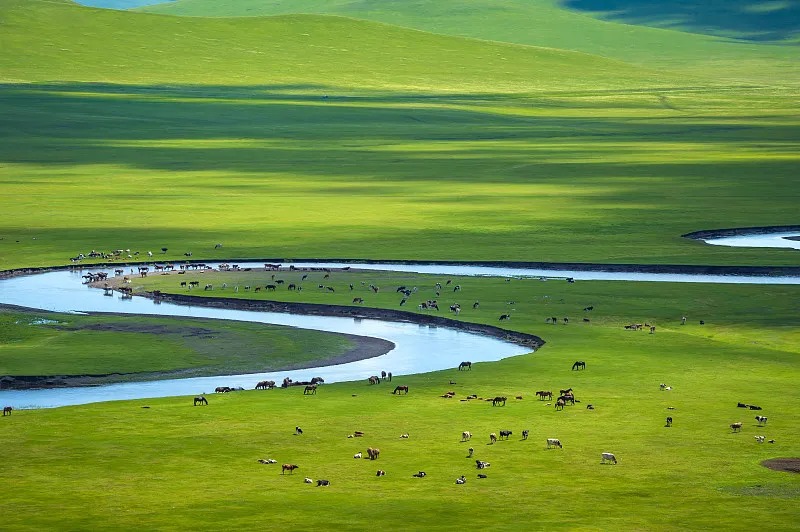
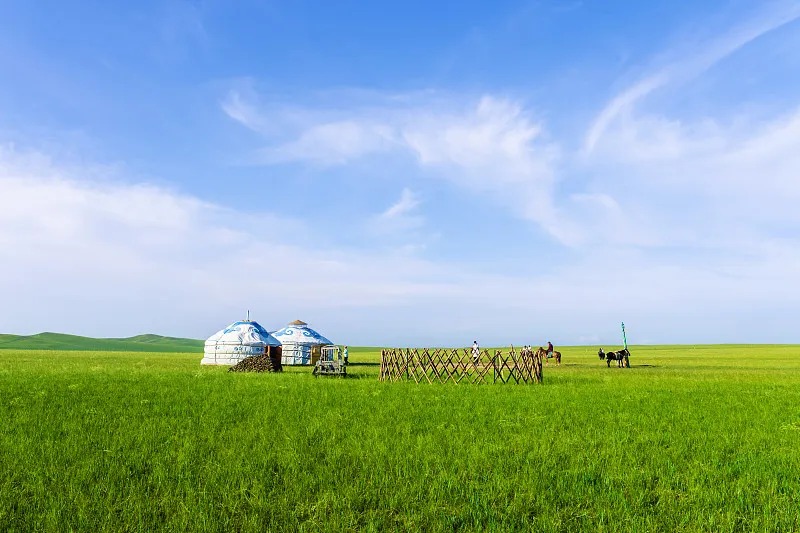
Located in the west of Hulunbuir City, the Hulunbuir Grassland is one of the four largest grasslands in the world, known as "the finest grassland in the world", and is undoubtedly the core cultural and tourism business card of Hulunbuir. The grassland covers a vast total area, stretching from the bank of Hulun Lake in the west to the western foot of the Greater Khingan Range in the east. It is the best-preserved natural grassland in China, with winding rivers like silk ribbons and scattered lakes like pearls. The Morigele River, with its winding course, is known as "the most winding river under heaven". It has different scenery in four seasons: green grass and blooming flowers all over the field in spring and summer, golden grass covering the ground and vast snowfield in autumn and winter, fully showing the grandeur of the northern grassland.
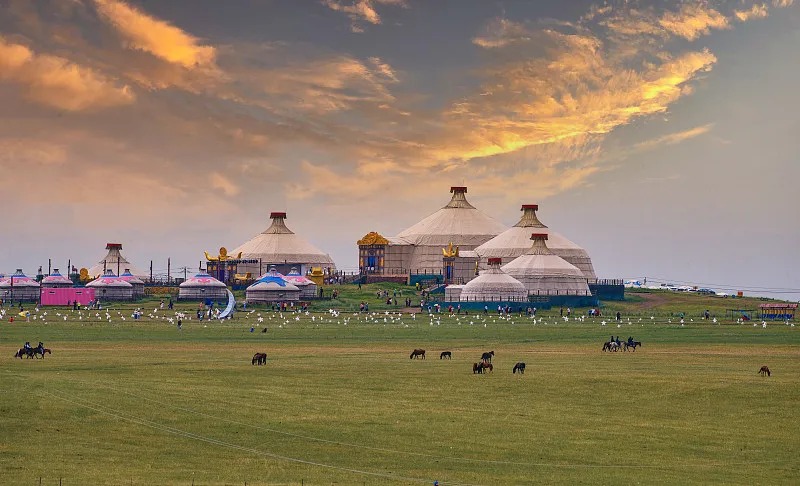
It is the core birthplace of northern nomadic civilization, bearing thousands of years of nomadic history. From the ancient Xianbei and Khitan to the Mongolian, nomadic peoples of all dynasties lived here by chasing water and grass, creating a splendid grassland culture. Genghis Khan once unified the Mongolian tribes here, and a large number of legends and relics related to Genghis Khan are preserved on the grassland. The Golden Horde Mongolian Tribe completely restores the style of the traveling camp during Genghis Khan's period, and has become a concentrated exhibition place of grassland culture. Today, the Barga and Buryat Mongolians on the grassland still completely retain the traditional nomadic lifestyle. Folk cultures such as yurts, lele carts, Ovoo Worship, Nadam Fair, horse-head fiddle, and Mongolian long tune are passed down from generation to generation. The grassland food culture such as hand-grabbed meat, milk tea and dairy products has unique characteristics, making it a living carrier of Chinese nomadic culture.
2. Ergun Wetland
Formerly known as Genhe Wetland, Ergun Wetland is located in Ergun City of Hulunbuir, on the right bank of the Ergun River. It is the largest and best-preserved native woody wetland in Asia, known as "the No.1 Wetland in Asia", and also an important ecological landmark of Hulunbuir. The wetland covers a vast total area, covering a variety of ecosystems such as rivers, swamps, herbs and shrubs, with rich species resources. It is an important post for global migratory bird migration, where hundreds of thousands of migratory birds stop and breed every spring and autumn. The wetland has stunning scenery in four seasons: full of green and blooming flowers in summer, colorful forests in autumn, frozen and quiet magnificent scenery in winter. Natural landscapes such as Horseshoe Island and S-bend are naturally formed, fully showing the unique charm of the wetland ecosystem.
It has a profound humanistic and historical heritage and is the birthplace of the Mongolian ethnic group. The Ergun River Basin is the core settlement of "Mengwu Shiwei" recorded in the Old Book of Tang, the homeland where the ancestors of the Mongolian people lived and multiplied, witnessing the complete process of the Mongolian ethnic group from tribes to rise, and is known as "the root of the Mongolian ethnic group". The Heishantou Ancient City Site around the wetland was the fief of Jochi Khasar, the eldest brother of Genghis Khan. The ancient city has a clear pattern, with a large number of relics from the Liao and Jin dynasties to the Mongol-Yuan period preserved, which is an important material evidence for the study of Mongol-Yuan history. Today, many ethnic groups such as Mongolian, Russian and Ewenki live around the wetland, where nomadic culture, farming culture and Russian customs are integrated, forming a unique border folk culture, and becoming a well-known scenic spot integrating ecological sightseeing, historical research and folk experience.
3. Manzhouli National Gate Scenic Area
Located at the China-Russia border in the west of Manzhouli City of Hulunbuir, Manzhouli National Gate Scenic Area is the core component of the Manzhouli China-Russia Border Tourist Area, a National 5A-level Tourist Attraction, as well as a key national red tourism scenic spot. It is the largest national gate at China's land ports, and also an important landmark for cultural exchanges between China and Russia at the border. First built in 1900, the national gate has gone through five generations of changes. The current fifth-generation national gate was completed in 2008, solemn and magnificent. The seven bright red Chinese characters "People's Republic of China" are inlaid on the gate body, with the national emblem hanging above the national gate, and the international railway passing through below. Standing on the national gate, visitors can overlook the border scenery of China and Russia, and have a panoramic view of the Russian city of Zabaykalsk in the distance.
It has witnessed a hundred years of historical changes at the China-Russia border, bearing a profound modern history and red culture. In the late Qing Dynasty, with the construction of the Chinese Eastern Railway, it became the core hub of commercial trade between China and Russia. During the revolutionary war years, it was the "red channel" for the Communist Party of China to contact the Communist International. Revolutionary ancestors such as Li Dazhao and Chen Duxiu traveled between China and the Soviet Union via here, making important contributions to the Chinese revolutionary cause. The Exhibition Hall of the 6th National Congress of the Communist Party of China in the scenic area systematically restores the history of the 6th National Congress of the CPC held in Moscow, and is the only special exhibition hall in China that fully displays the history of the 6th National Congress of the CPC. The No.41 Boundary Monument is solemn and sacred, a symbol of national sovereignty. Today, it is not only an important position for patriotic education, but also a window for the cultural integration of China, Russia and Mongolia. Complementing the surrounding Matryoshka Scenic Area and China-Russia Border Trade Zone, it shows the exotic customs and open and inclusive urban temperament of the century-old port, and witnesses the development of friendly exchanges between China and Russia.
4. Shiwei Russian Ethnic Township
Shiwei Russian Ethnic Township is located at the northern end of Ergun City of Hulunbuir, with the Ergun River, the boundary river between China and Russia, flowing through the south of the township, facing the Russian village of Olochi across the river. It is the only Russian ethnic township in China, a national famous town with characteristic landscape tourism, and also the core representative of Hulunbuir's border customs. The town is nestled by mountains and rivers with beautiful scenery. The Ergun River winds through, with the continuous mountains and forests of Russia on the opposite bank, vast grasslands and birch forests in the territory, and well-arranged wooden keleng houses. The blue and white Russian-style buildings are dotted among green mountains and clear waters, with a strong exotic atmosphere, known as "the most beautiful border town in China".
It has a dual historical and cultural heritage, being both the birthplace of the Mongolian ethnic group and a living fossil of the integration of Chinese and Russian cultures. As early as the Tang Dynasty, it was the core settlement of the Mengwu Shiwei tribe, the homeland where the ancestors of the Mongolian people lived for generations, with a large number of Shiwei cultural relics preserved, and an important destination for exploring the origin of the Mongolian ethnic group. In the late Qing Dynasty and the early Republic of China, a large number of Russians crossed the Ergun River to settle here, intermarried and multiplied with the Han people who came here during the Chuang Guandong period, forming a unique Sino-Russian descendant group. After a hundred years of inheritance, a unique ethnic culture has been formed. Today, the Sino-Russian descendants here still completely retain the traditional folk customs of the Russian ethnic group. National intangible cultural heritages such as wooden keleng building skills, Russian food culture, and Pascha Festival are inherited in a living state. Folk experiences such as rye bread making, matryoshka painting and Russian songs and dances have unique characteristics. Nomadic culture, Central Plains farming culture and Russian ethnic customs are deeply integrated here, becoming a vivid epitome of cultural exchanges between China and Russia at the border.
5. Aoluguya Reindeer Tribe Scenic Area
Located in Genhe City of Hulunbuir, in the hinterland of the northern section of the Greater Khingan Range, Aoluguya Reindeer Tribe Scenic Area is a National 4A-level Tourist Attraction, the only reindeer culture-themed scenic area in China, known as "the last hunting tribe in China", and a highly recognizable characteristic cultural and tourism landmark of Hulunbuir. The scenic area is located in Genhe, "China's Cold Pole", surrounded by the vast primeval forest of the Greater Khingan Range, with an original and pure ecological environment. The traditional living scene of the Ewenki reindeer herders is restored in the scenic area, with reindeer walking in the forest, well-arranged chums, and reindeer bells echoing in the forest sea, fully showing the tranquility and mystery of the primeval forest.
It bears hundreds of years of history and culture of the Ewenki reindeer herders, and is a living relic of hunting culture in northern China. The reindeer-herding branch of the Ewenki people, also known as the Yakut people, are the only ethnic group in China that lives on raising reindeer. They migrated from the Lake Baikal basin to the depths of the Greater Khingan Range more than 300 years ago, and have lived by hunting and raising reindeer for generations, forming a unique reindeer herding culture. In 2003, the reindeer herders moved here for ecological immigration from the depths of the Greater Khingan Range, and still completely retain the traditional production and lifestyle and folk culture. Today, the national intangible cultural heritages of the Ewenki people such as birch bark making skills, animal skin making skills, and Shaman dance are completely inherited in the scenic area. The traditional chum dwellings, hunting tools, and reindeer domestication skills have been fully protected and displayed. Visitors can interact closely with reindeer, experience the traditional life of the Ewenki reindeer herders, and feel the ecological concept of harmonious coexistence between man and nature. It is an important destination for studying the hunting ethnic culture and forest ethnic folk customs in northern China.
6. Moerdaoga National Forest Park
Located in Ergun City of Hulunbuir, at the northwest foot of the Greater Khingan Range, Moerdaoga National Forest Park is a National 4A-level Tourist Attraction, and the largest national forest park in China. It has long been honored as "Xishuangbanna in the South, Moerdaoga in the North", and is the core destination of forest eco-tourism in Hulunbuir. The park covers a vast total area with an extremely high forest coverage rate, preserving the best-preserved cold temperate primeval coniferous forest ecosystem in China. The vast forest of Xing'an larch, birch, Scotch pine and other trees stretches endlessly, with the Jiliu River passing through the park. The landscapes such as White Deer Island, Grey Wolf Island, Red Bean Slope and Nine Ridges in One Glance have their own characteristics. It has stunning scenery in four seasons: azaleas all over the mountains in spring, quiet forest sea in summer, colorful forests in autumn, vast ice and snow in winter, which is the epitome of the ecological scenery of the Greater Khingan Range.
It has a profound humanistic history and unique cultural characteristics. "Moerdaoga" means "mount the horse and go on an expedition" in Mongolian. It is said that when Genghis Khan unified the Mongolian tribes, he trained his troops here. Before the expedition, he climbed high and looked far here, shouting "Moerdaoga", hence the name of the place, which has become an important mark of Mongol-Yuan history. It has been the ancestral home of the Ewenki and Oroqen hunting ethnic groups for generations. For thousands of years, the hunting ethnic groups have lived and multiplied here, forming a unique forest hunting culture, and the ecological concept of coexisting with nature has been passed down from generation to generation. In modern times, it has become the core area of forestry development in the Greater Khingan Range, where forest industry culture and forestry educated youth culture have accumulated, with a large number of relics of forestry production and life preserved. Today, it is not only an important base for ecological protection and research of the Greater Khingan Range, but also an integrated exhibition place of forest culture, hunting culture and forest industry culture. It is a comprehensive scenic spot integrating ecological sightseeing, forest health preservation, historical research and folk experience.
7. World Anti-Fascist War Hailar Memorial Park
Located in the north of Hailar District of Hulunbuir City, the World Anti-Fascist War Hailar Memorial Park is a National 4A-level Tourist Attraction, National Patriotic Education Demonstration Base, and National Classic Red Tourism Scenic Spot. It is a military-themed red tourism scenic spot built on the site of the former Hailar Fortress of the Japanese invading army, and one of the few special scenic spots in China that fully displays the history of the Eastern Main Battlefield of World War II. The memorial park is divided into two parts: above ground and underground. Above ground, there is an anti-Japanese war themed museum, hero sculptures, memorial square, weapon exhibition ground, etc. Underground is the well-preserved underground fortifications of the Hailar Fortress of the Japanese army. The overall layout is solemn and solemn, fully restoring the historical truth of Japan's invasion of China during World War II.
It bears a profound history of the War of Resistance against Japanese Aggression, and is irrefutable evidence of the Japanese militarism's crimes of aggression against China. The Hailar Fortress was a military fortress built by the Japanese Kwantung Army from 1934 to 1937, in order to attack the Soviet Union and consolidate the colonial rule in Northeast China, by forcibly recruiting tens of thousands of Chinese laborers. It is one of the largest and most well-equipped fortresses among the 17 fortresses built by the Kwantung Army in Northeast China, known as the "Eastern Maginot Line". During the construction of the fortress, the Japanese army brutally killed a large number of Chinese laborers. The remains of the laborers and the Japanese torture instruments preserved in the fortress are direct evidence of the Japanese army's crimes of invading China. At the same time, it was also an important guerrilla area of the Northeast Anti-Japanese United Army. The officers and soldiers of the Anti-Japanese United Army carried out an arduous anti-Japanese struggle here, leaving a large number of heroic deeds. Today, through a large number of cultural relics, photos and scene restoration, the memorial park fully exposes the heinous crimes of Japanese militarism's invasion of China, and shows the unyielding history of the Chinese people's resistance to aggression. It is an important position for inheriting the spirit of the Northeast Anti-Japanese United Army, carrying out patriotic education and national defense education, and also the core landmark of Hulunbuir's red culture.
8. Hulun Lake
Also known as Dalai Lake, Hulun Lake is located in the west of the Hulunbuir Grassland, and is a sister lake with Buir Lake. It is the largest lake in Inner Mongolia and the fifth largest freshwater lake in China, known as "the Kidney of the Grassland" and "Pearl of the Grassland", and is the core component of the Hulunbuir Grassland ecosystem. The lake covers a vast total area, with vast expanse of blue waves and misty water surface, surrounded by the vast Hulunbuir Grassland. The lake scenery complements the grassland, with flocks of water birds and fishing boats dotted on the water. It has both the gentle beauty of a lake and the grandeur of the sea, known as "the Fairyland of the Guanghan Palace". The lake area has an excellent ecological environment, is an important wetland ecosystem in the northern grassland with rich species resources, an important post for global migratory bird migration, and also an important fishery production base in Inner Mongolia, rich in special aquatic products such as Chinese white shrimp and Hulun Lake carp.
It is the mother lake of the nomadic peoples in northern China, bearing thousands of years of nomadic civilization and fishing and hunting culture. As early as in the Shan Hai Jing, there are records of Hulun Lake. From the ancient Xiongnu and Xianbei to the Khitan, Jurchen and Mongolian, nomadic peoples in northern China of all dynasties have lived and multiplied here, living on nomadism, fishing and hunting, and creating a splendid grassland fishing and hunting culture. During the Liao and Jin dynasties, it was the core fishing and hunting place for the Khitan and Jurchen people, where the royal spring nabo activities were often held. Genghis Khan once herded here, and the thousand-year legend of Genghis Khan's Horse Tying Post has been circulated along the lake. The landscapes such as Genghis Khan's Horse Tying Post and Golden Coast by the lake are deeply bound to the Mongol-Yuan history. Today, the Barga Mongolians by the lake still completely retain the traditional fishing, hunting and nomadic customs. Folk activities such as the lake worship and net waking ceremony, and the grassland Nadam Fair are passed down from generation to generation. The food culture such as whole fish feast and hand-grabbed meat has unique characteristics. Hulun Lake is not only the core area of grassland ecological protection, but also an important carrier of Hulunbuir's nomadic culture and fishing and hunting culture, witnessing the thousand-year history of harmonious coexistence between the nomadic peoples of the northern grassland and nature.

 English
 French
 Spanish
 Russian
 Arabic
 Italy
Italy