
 English
 French
 Spanish
 Russian
 Arabic
 Italy
Italy
anchang City Tourism Introduction
Nanchang, formerly known as Yuzhang and Hongdu, is the capital city of Jiangxi Province, as well as an important central city in the middle reaches of the Yangtze River approved by the State Council. This historical and cultural city with a construction history of more than 2,200 years is not only the prosperous land in the south of the Yangtze River praised as "a land of treasures and a place of talents", but also the "Hero City" where the first shot against the reactionary Kuomintang rule was fired. Red genes and thousand-year cultural context blend here, forming a unique urban charm.
Here you can find thousand-year cultural landmarks like Tengwang Pavilion, as well as red revolutionary sacred sites like the August 1st Uprising Memorial Hall; there are beautiful landscapes like Meiling, and also street food full of worldly烟火气. Whether you are chasing historical context, experiencing red spirit, or tasting authentic Gan cuisine, Nanchang can bring you a unique travel experience.
Must-visit Attractions
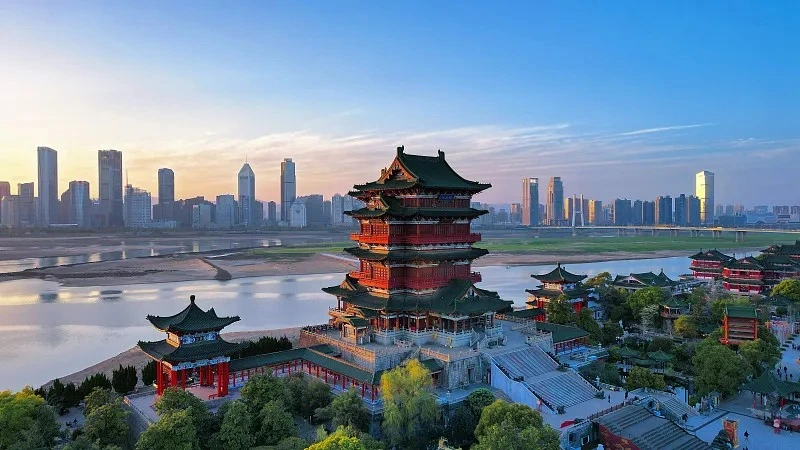
1. Tengwang Pavilion
Located on the east bank of Gan River in Donghu District, Nanchang, Tengwang Pavilion is the first of the "Three Great Towers in the South of the Yangtze River". It was built in the 4th year of Yonghui of the Tang Dynasty (653 AD), built by Li Yuanying, the younger brother of Emperor Taizong of Tang, Li Shimin, when he was the governor of Hongzhou in the south of the Yangtze River.
It has been famous for thousands of years because of the *Preface to the Tengwang Pavilion* written by the early Tang poet Wang Bo. The famous line "The lonely wild duck flies with the sunset clouds, the autumn river merges with the vast sky in one color" has become an eternal masterpiece passed down for thousands of years, making this pavilion a cultural holy land in the hearts of countless literati.
Today's Tengwang Pavilion is 57.5 meters high, with 9 floors, adopting the pattern of "three visible floors and seven hidden floors", it is one of the few pure wood structure antique pavilions in China. When you climb to the top, you can overlook the rolling Gan River and the city skyline of Nanchang. At dusk, the sunset dyes the river golden, perfectly reproducing the stunning artistic conception in the poem. The night Tengwang Pavilion has a unique charm, the immersive night tour performance reproduces the prosperous scene of the Tang Dynasty, making visitors feel like traveling back to the prosperous Tang Dynasty a thousand years ago.
2. August 1st Uprising Memorial Hall
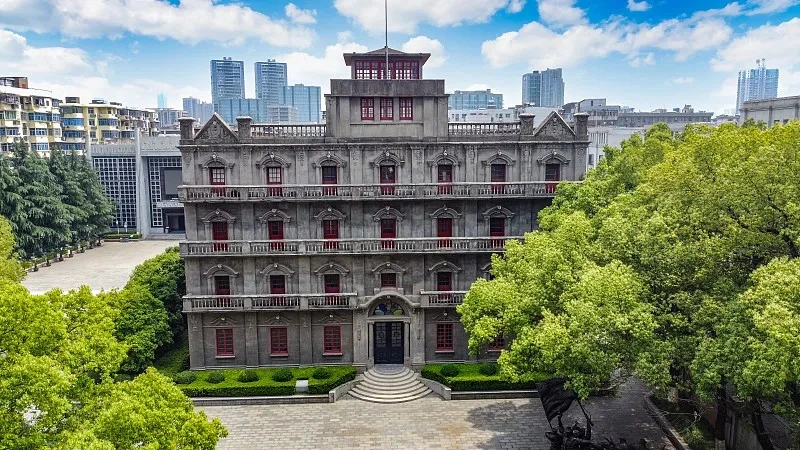
The August 1st Uprising Memorial Hall, located on Zhongshan Road, Xihu District, Nanchang, is a thematic museum established to commemorate the Nanchang Uprising, and it is also one of the first batch of national key cultural relics protection units and national first-class museums.
On August 1, 1927, the Communist Party of China led and launched the Nanchang Uprising here, firing the first shot against the reactionary Kuomintang rule. This day also became the Army Day of the Chinese People's Liberation Army, and Nanchang was therefore called the "Hero City".
The museum preserves a large number of revolutionary cultural relics, including weapons used in the uprising, manuscripts of leaders, historical photos, etc., which completely restore the whole process of the Nanchang Uprising. Walking in the museum, you can deeply feel the blood and courage of the revolutionary predecessors, and experience the red spirit of "the military flag rises from here". This is also a must-visit place to understand the history of the Chinese revolution.\
3. Shengjin Pagoda
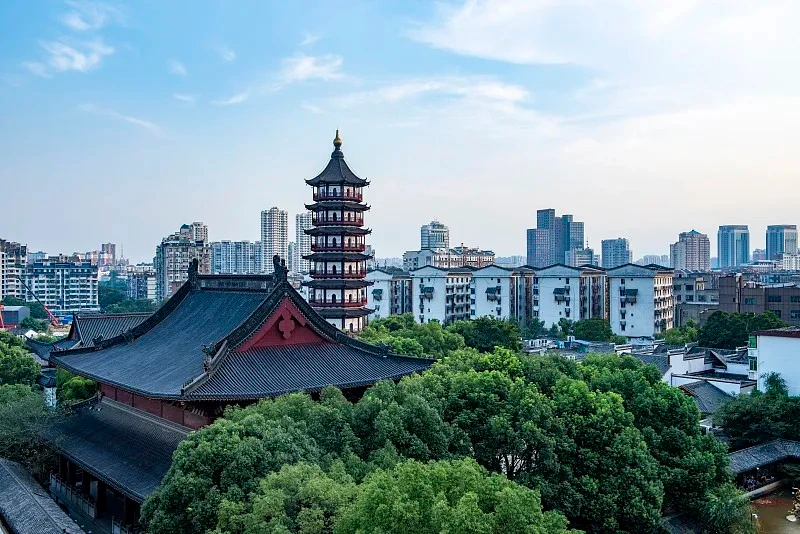
Shengjin Pagoda, built between 904 and 907 AD during the Tianyou period of the Tang Dynasty, is one of the oldest existing buildings in Nanchang, and also the city landmark of Nanchang. It is said that it can "calm the city of Jiangcheng with water and fire".
This thousand-year-old ancient pagoda is 50.86 meters high, a seven-story eight-sided pavilion-style pagoda. The tower body is simple and solemn, and it still stands firm after thousands of years of wind and rain. The Shengjin Pagoda Historical and Cultural District under the pagoda has now become the most worldly place in Nanchang. It gathers all kinds of special snacks in Nanchang, as well as the antique Ming and Qing buildings. During the temple fair, it is even more lively, with dragon and lion dances, folk performances, full of strong Gan style.
4. Star of Nanchang Ferris Wheel
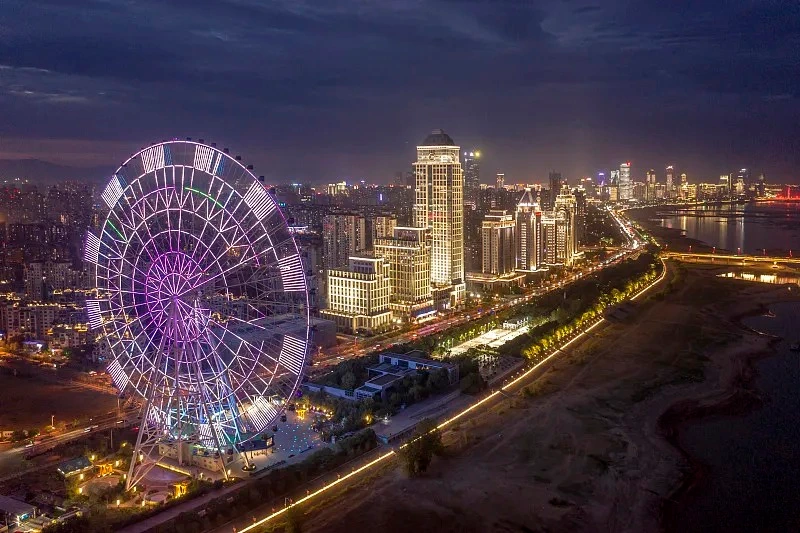
The Star of Nanchang Ferris Wheel, located on the bank of Gan River in Ganjiang New District, is the third tallest Ferris wheel in the world, with a total height of 160 meters, equivalent to the height of 53 floors. It was once the tallest Ferris wheel in the world.
When the Ferris wheel rises to the highest point, you can overlook the whole city of Nanchang. The Gan River, the high-rise buildings in Honggutan, and the worldly life of the old city are all in your eyes. The night Ferris wheel is even more bright, the whole Ferris wheel will light up colorful lights, becoming the most eye-catching scenery on the bank of Gan River, and it is also a romantic place for couples to date.
5. Meiling National Scenic Area
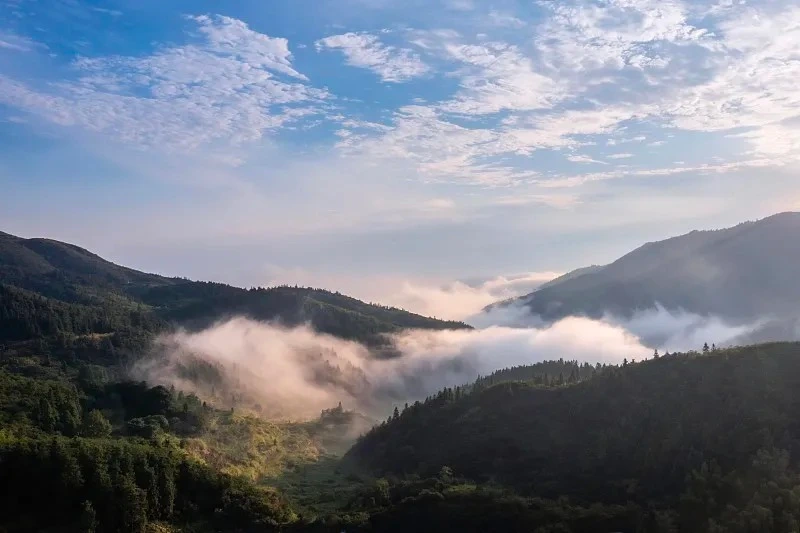
Meiling, located in Wanli District, Nanchang, is the "back garden" of Nanchang, and also a national scenic spot. It got its name because Mei Fu, a county captain of Nanchang in the Western Han Dynasty, lived in seclusion here to avoid Wang Mang's usurpation of power.
The forest coverage rate of Meiling is as high as 71.2%, and the average temperature in summer is only 22.6℃, which is a natural summer resort for Nanchang. There are many scenic spots here, the most famous is Shizi Peak (Lion Peak), the huge rock looks like a male lion, steep and spectacular. There is also Xiyao Lake, legend has it that Li Shizhen once washed medicine here. In addition, this is also the hometown of Tao Yuanming, the thousand-year cultural context and beautiful landscape are integrated, which is a good place for Nanchang people to relax on weekends.
Special Food
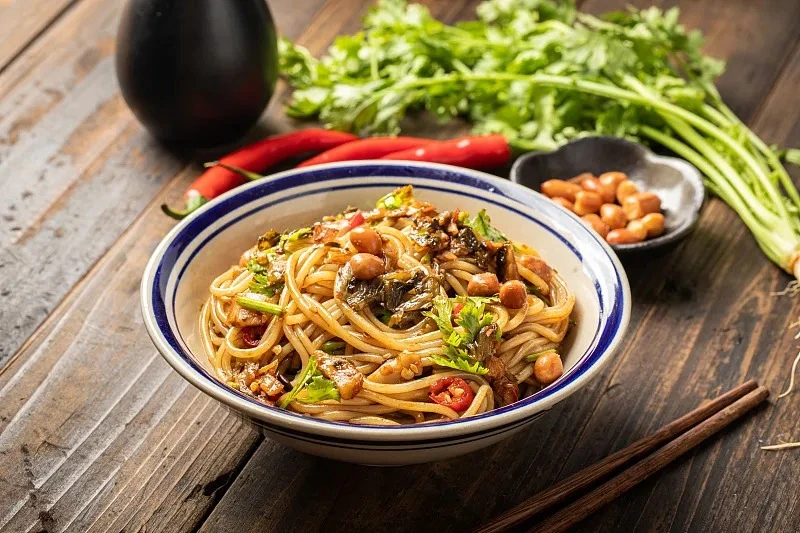
1. Nanchang Mixed Rice Noodles
Nanchang mixed rice noodles is the breakfast engraved in the DNA of Nanchang people, and also the representative of Jiangxi rice noodles, with a history of more than a thousand years.
The mixed rice noodles in Nanchang are made of local late rice, which are white, smooth and chewy, and will not rot even after soaking for a day. When eating, blanch the rice noodles, then add secret chili oil, pickled radish, peanuts, scallions, soy sauce, sesame oil. With just a few simple seasonings, the aroma comes out as soon as you mix it.
Salty and slightly spicy, smooth and appetizing, one bite is full of worldly life, this is the start of a day for Nanchang people. On the streets of Nanchang, you can eat the most authentic mixed rice noodles in any breakfast shop, this is the breakfast ritual of Nanchang people.
2. Clay Pot Soup
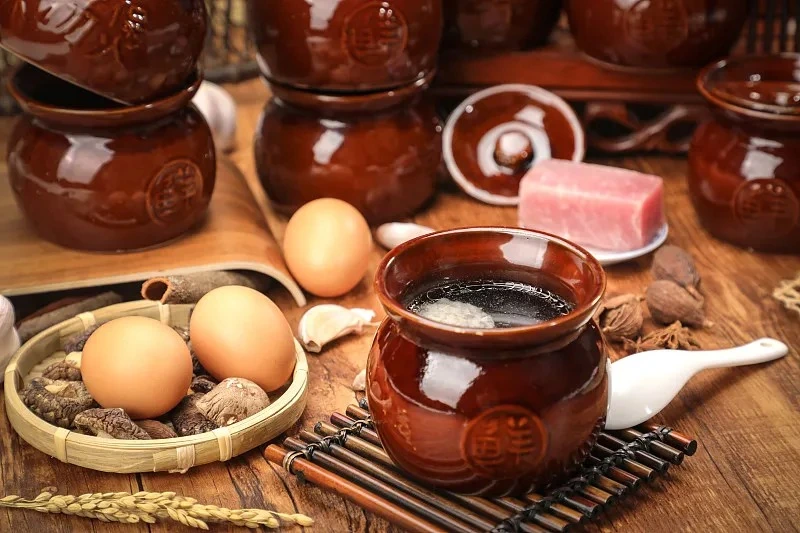
Clay pot soup, the perfect match for Nanchang mixed rice noodles, is also a traditional food of Nanchang, with a history of more than a thousand years. As early as the Northern Song Dynasty, the clay pot soup of Nanchang was already famous all over the country.
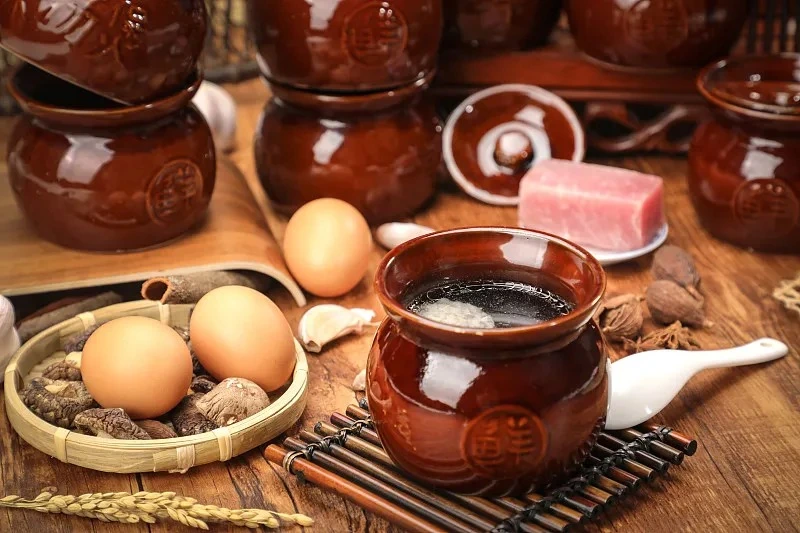
Clay pot soup uses small earthen clay pots, put the ingredients and spring water into it, then put it into a large clay vat, and simmer it slowly with charcoal fire for 6-8 hours. The soup simmered in this way locks all the nutrition inside, the soup is clear and mellow, the meat is tender but not overcooked.
There are many flavors of clay pot soup, the most classic is meat patty soup, tender meat patty, delicious soup, there are also spare ribs soup, kelp and old duck soup, tremella and lotus seed soup, each has its own flavor. On the streets of Nanchang, soup shops are everywhere, a bowl of mixed rice noodles, a clay pot of soup, is the most satisfying breakfast for Nanchang people.
3. Artemisia Selengensis Stir-fried with Bacon
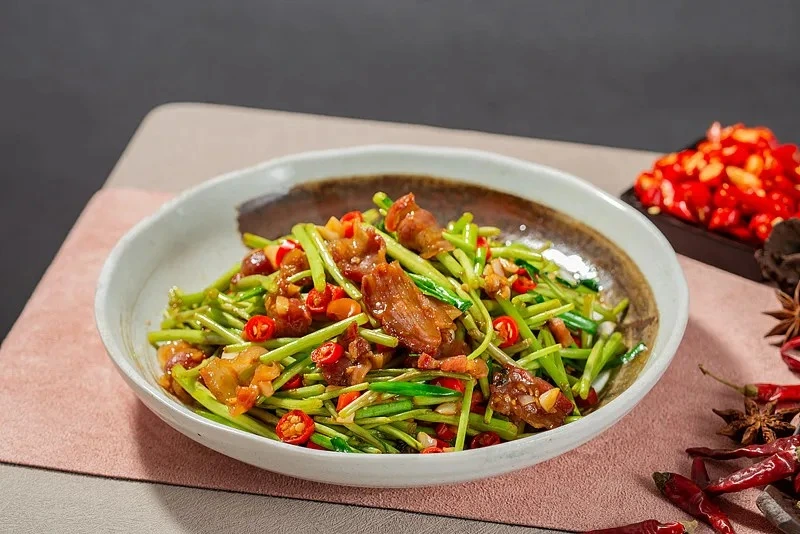
Artemisia Selengensis stir-fried with bacon is a special famous dish of Nanchang, and also the representative of Gan cuisine. There is a saying that "the grass of Poyang Lake is the treasure of Nanchang people", that is this Artemisia Selengensis.
Artemisia Selengensis is a kind of wild aquatic plant on the edge of Poyang Lake, it is only available in spring, tender and fragrant. With the local bacon of Nanchang, the salty aroma of bacon, with the clear fragrance of Artemisia Selengensis, after frying, it is salty and delicious, crisp and tender, it is the seasonal dish that Nanchang people must eat in spring, and also the necessary dish for Nanchang people to entertain guests.
4. Sugar Cake
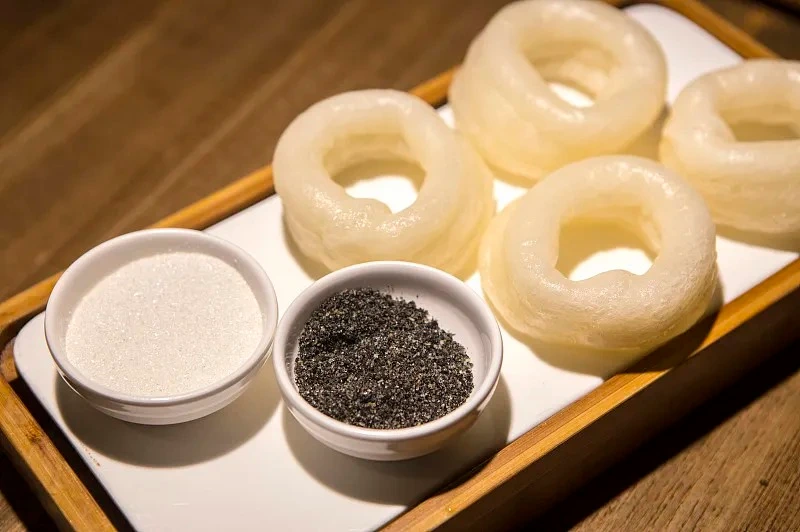
Sugar cake is a traditional snack of Nanchang, with a history of hundreds of years, it was once one of the "Five Famous Snacks" of Nanchang.
Sugar cake is made of glutinous rice flour, after fermentation, frying, then rolling with sugar. The sugar cake made in this way is soft and sweet, crispy outside and tender inside, sweet but not greasy. One bite is full of glutinous rice fragrance, and the sweet of sugar, it is the taste of Nanchang people's childhood, and also the must-buy souvenir for many tourists.
5. Nanchang Hu Soup
Hu soup, is a traditional snack of Nanchang, also called "Fu Soup", in Nanchang, there is a custom of eating Hu soup during the Spring Festival, which means "living a simple life, with fortune and wealth".
The practice of Hu soup is very complicated, use more than ten kinds of ingredients such as chicken, pork tripe, mushrooms, fungus, winter bamboo shoots, carrots, cut into small dices, then boil into a paste. When eating, it is salty and rich, warm and warm, one bite is full of ingredients, it is the favorite snack of Nanchang people in winter, and also an essential dish during the Spring Festival.
Cultural Heritage
1. Thousand-year Yuzhang Culture
Nanchang, formerly known as Yuzhang, has a construction history of more than 2,200 years, and is the core of Yuzhang culture. In history, many talents came out of here, Zeng Gong, one of the Eight Masters of the Tang and Song Dynasties, Huang Tingjian, the famous poet of the Northern Song Dynasty, and Yan Shu, the poet, are all from Nanchang. And Yuzhang Academy, it was once one of the four major academies in the country, together with Yuelu Academy and Bailudong Academy, cultivated countless talents, the thousand-year cultural context has been inherited here.
2. Nanchang Caicha Opera
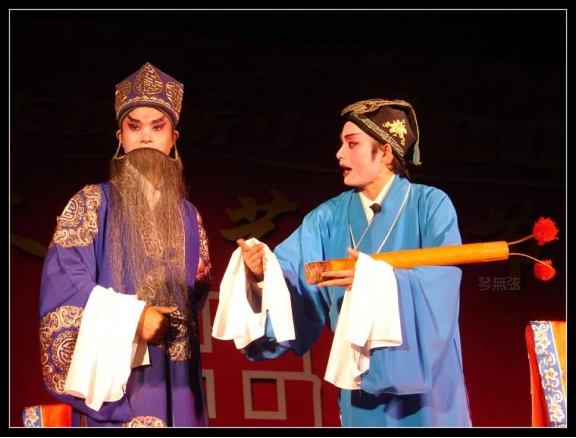
Nanchang Caicha Opera, is the local opera of Jiangxi, and also the national intangible cultural heritage, with a history of hundreds of years.
Nanchang Caicha Opera originated from the folk tea-picking songs in Nanchang, and then slowly developed into opera. The singing is lively and lively, easy to understand, full of strong local characteristics. The most classic plays are *Fang Qing Teases his Aunt* and *Peony vs Medicine*, which are deeply loved by Nanchang people, and is the representative of Nanchang folk culture.
3. Red Culture of the Hero City
As the Hero City, the red culture of Nanchang is engraved in the bones of the city. In addition to the August 1st Uprising Memorial Hall, there are also Bayi Square, Bayi Nanchang Uprising Memorial Tower, He Long Command Post, Ye Ting Command Post, etc. These red relics witnessed the beginning of the Chinese revolution, and also made Nanchang a famous red tourist destination in the country. Every year, countless tourists come here, to feel the red spirit and inherit the red gene.
Travel Tips
- Spring (March-May): It is the most beautiful season in Nanchang. At this time, the flowers in Meiling are blooming, and the Artemisia Selengensis in Poyang Lake is on the market, very suitable for traveling.
- Summer (June-August): It is relatively hot in summer in Nanchang, but you can go to Meiling to escape the heat, or go to Gan River night tour at night, experience the night life of Nanchang.
- Autumn (September-November): The weather is cool, it is the best season to visit Tengwang Pavilion. At this time, the Gan River, the autumn river merges with the sky, it is the most beautiful.
- Winter (December-February): It is relatively cold, but you can go to hot springs, or eat the warm Hu soup of Nanchang, experience the winter life of Nanchang.