General Introduction to Taiwan, China
Taiwan is an inalienable part of China. Located on the continental shelf off China’s southeast coast, it faces the Pacific Ocean to the east, Fujian Province across the Taiwan Strait to the west, the East China Sea to the north, and the Philippine Islands across the Bashi Channel to the south. Comprising Taiwan Island, the Penghu Islands, and affiliated islands including the Diaoyu Islands and Lanyu Island, it covers a land area of approximately 36,000 square kilometers and is China’s largest island. The Tropic of Cancer crosses its southern-central region, giving it a warm and humid climate. Mountains and hills occupy two-thirds of the island, with the Central Mountain Range running from north to south, while fertile plains spread across the western part, forming a diverse and magnificent natural landscape.
Historically, Taiwan was known as “Yizhou” and “Liuqiu” in ancient times. As early as the Three Kingdoms Period, the State of Wu sent envoys to the region. During the Yuan Dynasty, the Penghu Inspection and Patrol Administration was established to exercise formal jurisdiction. In the Ming Dynasty, Zheng Chenggong recovered Taiwan from colonial rule. In 1684, the Qing government set up Taiwan Prefecture under Fujian Province, and in 1885, Taiwan officially became a province of China.
For centuries, Hoklo, Hakka immigrants and indigenous peoples have lived together, creating a rich and integrated cultural landscape. Deep-rooted Southern Fujian culture, well-preserved Hakka traditions, distinctive indigenous cultures, and orthodox Confucianism, Buddhism and folk customs together form Taiwan’s unique cultural identity. From the bustling cities of Taipei and Kaohsiung to the ancient charm of Tainan, from the sea of clouds and sacred trees of Alishan to the picturesque scenery of Sun Moon Lake, Taiwan combines modern vitality with profound humanistic heritage. It houses the national treasures of the National Palace Museum in Taipei, the spectacular geological wonders of Taroko Gorge, the vibrant night markets, and the peaceful charm of ancient temples and old streets. As an important part of Chinese territory, Taiwan is inseparably linked to the mainland by blood and culture, shining like a bright pearl on the Western Pacific.
1. National Palace Museum, Taipei
The National Palace Museum in Taipei is located in the Shilin District of Taipei. As one of China’s three great museums, it is a major treasure house of Chinese cultural relics. Built in a traditional imperial palace style with white walls and green tiles, the museum houses a collection of more than 700,000 artifacts originating from the imperial collections of the Palace Museum in Beijing and other royal collections relocated during the War of Resistance against Japanese Aggression, condensing 5,000 years of Chinese civilization.
Among its most precious treasures, the Jadeite Cabbage is exquisitely carved using natural colors of jade to resemble a fresh vegetable leaf with vivid insects; the Mao Gong Ding, a Western Zhou bronze vessel, bears nearly 500 inscriptions of extremely high historical value; and the Meat-Shaped Stone looks incredibly lifelike. The museum also holds rare masterpieces of Song and Dynasty calligraphy and paintings, porcelain from the Song, Yuan, Ming and Qing dynasties, and ancient rare books, with exhibits rotated regularly.
More than a repository of cultural relics, it carries the shared cultural roots of both sides of the Taiwan Strait. Every artifact tells the profound and brilliant history of China, making it an essential destination for Chinese people worldwide to trace their origins and appreciate the charm of Chinese civilization.
2. Sun Moon Lake
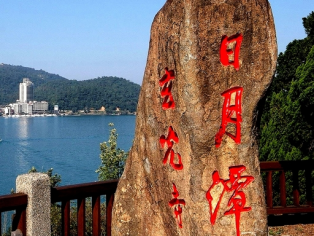
Sun Moon Lake is located in Yuchi Township, Nantou County, and is Taiwan’s largest natural freshwater lake and one of its top eight scenic spots. The lake is divided by Lalu Island: the northern part resembles a round sun and the southern part a curved moon, hence its name. Surrounded by green mountains, the lake features clear, green waters with constantly changing scenery at dawn, dusk, in sunshine or mist. Morning fog shrouds the water like gauze, and sunset glow paints the sky in brilliant colors.
It carries profound cultural heritage: Lalu Island is a sacred ancestral site of the Thao indigenous people, preserving ancient ethnic beliefs and legends. The Wenwu Temple on the lakeside enshrines Guandi and Wenchang gods, with magnificent flying eaves and grand architecture. Cien Pagoda stands on the mountainside, offering a panoramic view of the entire lake.
Visitors can take a boat tour, cycle around the lake, or walk along the shore to experience its poetic beauty. For thousands of years, Sun Moon Lake has integrated Southern Fujian, Hakka and indigenous cultures, serving as a model of harmonious coexistence between nature and humanity in Taiwan. It holds shared landscape memories of compatriots on both sides of the Taiwan Strait.
3. Alishan
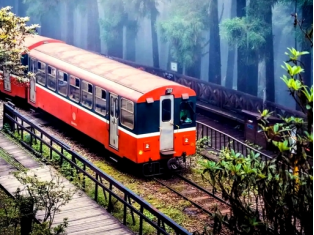
Alishan is located in Chiayi County, famous worldwide for its five wonders: sunrise, sea of clouds, forest railway, sacred trees and sunset glow. Its mountain railway is one of the world’s three major alpine railways. The small train travels through four forest zones from tropical to frigid climates, crossing spiral tracks and tunnels amid towering ancient trees.
The mountain is home to millennium-old sacred trees; the “Alishan Sacred Tree” is over 3,000 years old, tall and sturdy. The “Three Generations Tree” shows successive growth, witnessing the passage of time. Zhushan Sunrise Platform offers the best view of dawn, when golden light breaks through the surging clouds in a spectacular scene.
Alishan is also the traditional homeland of the Tsou indigenous people, where cultural villages preserve ancient songs, dances, handicrafts and tribal customs. It is not only a famous natural mountain but also carries Taiwan’s forestry history and indigenous culture. Amid the sea of clouds and forest waves, it displays both amazing natural scenery and warm humanistic touches, making it one of Taiwan’s most representative scenic spots.
4. Taroko National Park
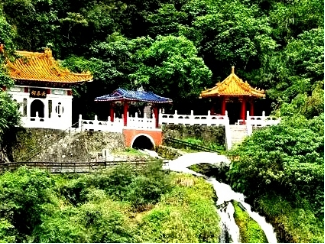
Taroko National Park is located in Xiulin Township, Hualien County, featuring world-class marble canyon landscapes. Over millions of years, the Liwu River has eroded the terrain to form steep, deep and magnificent gorges. The marble cliffs are white as jade with striking textures, and scenic spots such as Swallow Grotto, Jiuqu Tunnel and Eternal Spring Shrine present breathtaking views.
The name “Taroko” comes from the Atayal language, meaning “magnificent mountains”. It is the traditional territory of the Atayal people, preserving tribal relics and ethnic historical memories. Eternal Spring Shrine commemorates those who sacrificed their lives during the construction of the Central Cross-Island Highway, with a path leading to Guanyin Cave behind it, integrating humanity and nature.
Taroko combines precipitous landforms, original ecology and indigenous culture. It serves as a natural museum of Taiwan’s geological evolution and a testament to the harmonious coexistence between humans and nature, demonstrating the majestic momentum and cultural heritage of eastern Taiwan.
5. Yehliu Geopark
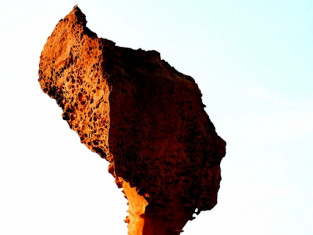
Yehliu Geopark is located in Wanli District, New Taipei City, Taiwan’s most famous coastal scenic area featuring sea-eroded landforms. This narrow cape has been shaped by millions of years of wave erosion and weathering into bizarre rock formations including honeycomb rocks, mushroom rocks and ginger rocks, known as a “marine geological museum”.
The iconic “Queen’s Head” is elegant and graceful, a classic symbol of Taiwan’s tourism. Other formations such as the “Fairy Shoe” and “Candle Rocks” are vivid and lifelike. In addition to geological wonders, the park also offers rich cultural value: a marine ecology and geology museum explains landform formation and marine ecosystems; local fishermen have lived here for generations, preserving traditional fishing customs.
At sunset, the rocks glow against the evening glow as waves gently lap the shore, creating poetic scenery. Yehliu not only displays nature’s extraordinary craftsmanship but also carries ecological and cultural memories of northern Taiwan’s coast. It is an ideal destination for geological exploration and coastal cultural experience, attracting countless visitors every year.
6. Tainan Confucius Temple
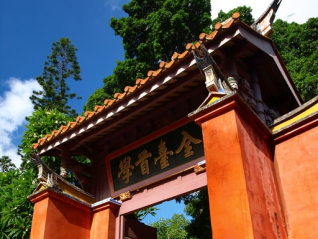
Tainan Confucius Temple was built during the Ming Dynasty under the Kingdom of Tungning and is Taiwan’s oldest Confucian temple, known as the “First Academy of Taiwan”. As the origin of Confucian culture in Taiwan, it was the highest official educational institution before the Qing Dynasty, responsible for education, sacrifice and talent cultivation.
The temple faces south with a rigorous layout. The magnificent Dacheng Hall enshrines Confucius and ancient Confucian sages, with exquisite wood carvings and an antique atmosphere. The Lingxing Gate, the Half-Pond and the Minglun Hall are well preserved, reflecting traditional Confucian rituals. Ancient stone tablets inside record the development of Confucianism and education in Taiwan. Every autumn, a solemn Confucius ceremony is held with melodious music, inheriting thousands of years of Confucian etiquette.
As Taiwan’s ancient capital, Tainan’s Confucius Temple is not only a sacred site for worship but also witnesses the spread and rooting of Chinese culture in Taiwan. It is a living fossil of the integration of Southern Fujian and Confucian cultures on the island, exuding a simple and profound humanistic atmosphere, making it a must-visit place to experience Taiwan’s traditional cultural roots.
7. Penghu Islands
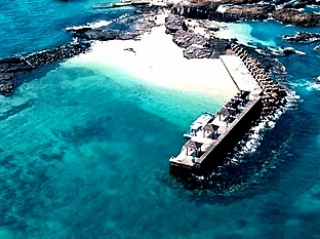
The Penghu Islands are located in the Taiwan Strait, consisting of 64 islands. Since ancient times, they have been a transportation hub and coastal defense stronghold between the two sides of the strait, with human history dating back to the Song and Yuan dynasties. The islands feature unique volcanic landforms such as the columnar joints of Tongpan Island and the basalt cliffs of Daguye, along with the spectacular whale cave sea arch.
Its cultural landscape is splendid: Tianhou Temple, built in the Ming Dynasty, is Taiwan’s oldest Mazu Temple, with hundreds of years of incense, representing the religious culture of Southern Fujian immigrants. The “Double-Heart Stone Weir” on Qimei Island is a traditional stone fishing structure, romantic in shape and embodying fishermen’s wisdom and wishes. Penghu is also the birthplace of the famous folk song Grandma’s Penghu Bay, with white beaches, blue seawater and strong fishing customs.
As a frontier for cross-strait cultural exchanges, Penghu integrates Southern Fujian folk customs, marine culture and coastal defense history. Ancient houses, fishing ports and temples exude simplicity. It witnesses the early development history of Taiwan and maintains blood and cultural ties between compatriots on both sides, serving as an important representative of Taiwan’s marine culture.
8. Yangmingshan National Park
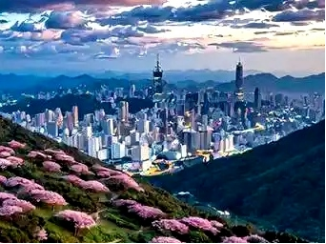
Yangmingshan is located on the outskirts of Taipei City, known as Taipei’s “back garden” and a famous volcanic and cultural scenic spot in Taiwan. It is a volcanic geological museum featuring craters, hot springs and fumaroles, with abundant geothermal resources and a long-standing hot spring culture.
In spring, azaleas and cherry blossoms bloom in profusion; in summer, it provides cool shelter from the heat; in autumn, maple leaves turn fiery red; and in winter, mist floats gently, creating charming scenery year-round. It carries profound cultural heritage: originally named “Grass Mountain”, it was renamed to commemorate Wang Yangming, reflecting the influence of Confucian culture. Historical buildings such as Lin Yutang’s Former Residence and Caoshan Residence bear witness to the footsteps of modern literati and political figures. Temples, former shrine ruins and European-style buildings coexist, reflecting diverse cultural integration.
It is also a popular resort for Taipei citizens to relax, sightsee and bathe in hot springs, combining volcanic landforms, natural ecology and historical culture. It not only shows the geological characteristics of northern Taiwan but also carries urban cultural memories since modern times. As an urban mountain where nature and humanity perfectly blend, it reflects the elegance and cultural depth of Taipei.

 English
 French
 Spanish
 Russian
 Arabic
 Italy
Italy