English
 French
 Spanish
 Russian
 Arabic
 Italy
Italy
Introduction to Zhuhai’s Famous Scenic Spots
1. Lovers' Road and Zhuhai Fisher Girl Statue
Located on the bank of Xianglu Bay along Lovers' Road, the Zhuhai Fisher Girl Statue was completed in 1982, designed by the famous Chinese sculptor Pan He. With a total height of 8.7 meters, it is made of 70 pieces of granite, and is the first large-scale seaside statue in China, as well as the ultimate urban symbol of Zhuhai. The statue tells the touching love legend between the daughter of the South China Sea Dragon King and Haipeng, a young fisherman. The fisher girl wears a necklace around her neck, carries a fishing net on her back, with her trouser legs slightly rolled up, and holds a bright pearl high with both hands. It not only carries the marine belief passed down from generation to generation by Zhuhai fishermen, but also symbolizes Zhuhai's open spirit of embracing the world. Today, Lovers' Road and the Zhuhai Fisher Girl Statue are not only a national AAA-level tourist attraction, but also the core carrier of Zhuhai's marine culture, romantic culture and special economic zone spirit, becoming the most recognizable coastal cultural and tourism landmark in the Guangdong-Hong Kong-Macao Greater Bay Area.
2. Chimelong Ocean Kingdom, Zhuhai
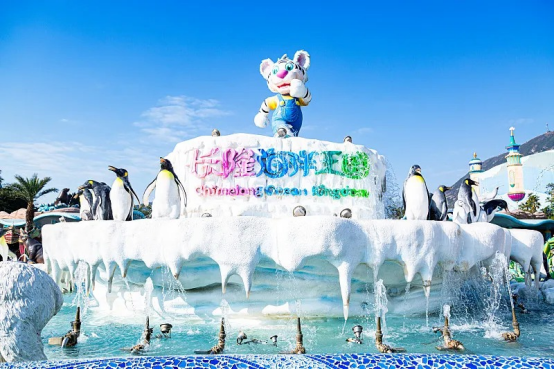
As a core position for the popularization and dissemination of China's marine culture, the park takes "marine conservation, science education, cultural and tourism integration" as its core, and is divided into seven themed areas including Ocean Avenue, Dolphin Cove, Rainforest Flying and Ocean Wonders. It is home to rare marine animals such as beluga whales, polar bears, penguins and whale sharks. Among them, the Whale Shark Aquarium has the world's largest acrylic glass aquarium with a water volume of 31,000 cubic meters, making it the world's largest marine life exhibition hall. The park not only creates a world-class amusement experience, but also deeply integrates the Lingnan marine culture and the connotation of the integrated development of the GBA. It holds marine science research and study activities, environmental protection public welfare activities, and Guangdong-Hong Kong-Macao cultural and tourism exchange activities all year round, perfectly integrating the modern cultural and tourism industry with marine ecological protection and cultural communication. It has not only reshaped the development pattern of China's theme parks, but also become the core engine for the high-quality development of the cultural and tourism industry in Zhuhai Special Economic Zone.
3. Wai Lingding Island
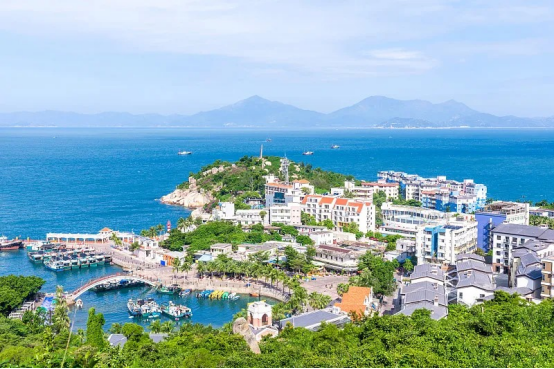
Wai Lingding Island has been a key maritime traffic artery and coastal defense stronghold in the Pearl River Estuary since ancient times. During the Ming and Qing dynasties, it was the core coastal defense stronghold of the Wanshan Islands, retaining historical relics such as ancient beacon towers and customs sites, witnessing the thousand-year prosperity of the Maritime Silk Road and the coastal defense history of the Pearl River Estuary. The island covers a total area of 4.23 square kilometers, with its main peak, Lingding Peak, at an altitude of 311.8 meters. It boasts magnificent rocks, clear waters and intertwined mountains and seas, with high-quality beaches such as Lingding Bay, Ta Bay and Dadong Bay, and crystal clear sea water, making it a well-known coastal resort in the GBA. Today, Wai Lingding Island not only retains the original ecological island scenery, but also deeply explores Wen Tianxiang's patriotic culture, marine fishing and hunting culture, and coastal defense history and culture. It has built cultural landscapes such as Wen Tianxiang Cultural Square, Cliff Inscriptions and Lingding Peak Observation Deck, perfectly integrating patriotic culture, marine culture and island tourism.
4. New Yuanming Palace
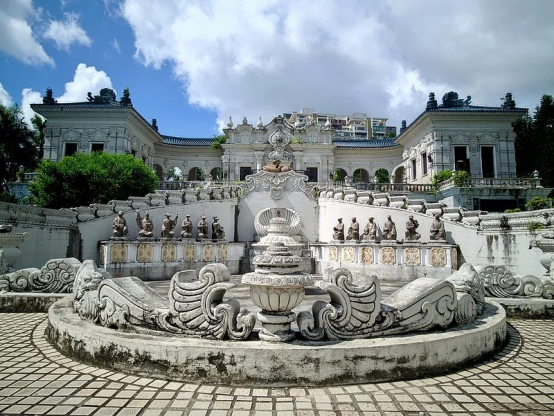
In strict accordance with the classical architectural regulations of the Old Summer Palace in Beijing, the park has selected 18 of the 40 Scenes of the Old Summer Palace for 1:1 restoration, divided into three major sections: royal building complex, Jiangnan garden building complex and Western-style building complex. It perfectly replicates classic landscapes such as the Hall of Absolute Brightness, Jiuzhou Qingyan, Pengdao Yaotai and the Great Fountain of the Western Mansions. It not only restores the grandeur of the royal gardens of the Qing Dynasty, but also integrates the exquisiteness of Lingnan gardens, perfectly integrating northern royal gardens, Jiangnan private gardens and Western classical architecture. The park is not only an exhibition window for architectural art, but also deeply explores the royal culture of the Qing Dynasty and the modern history of China. It holds large-scale live-action performances Dreaming Back to Yuanming Palace, Qing Dynasty court culture exhibitions, intangible cultural heritage and folk activities all year round. It restores the life of the Qing Dynasty court through immersive interpretation and tells the vicissitudes of the Old Summer Palace, becoming a unique royal garden culture experience destination in the Lingnan region.
5. Meixi Archway Tourist Area
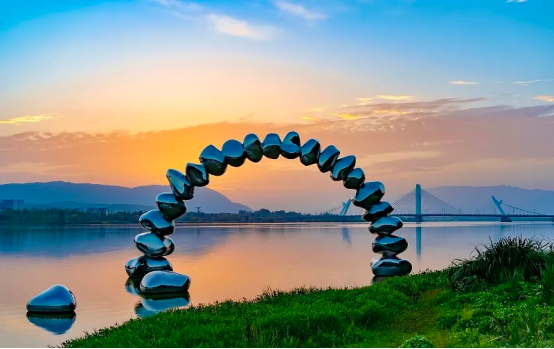
The archway complex consists of three granite stone archways, adopting a Chinese-Western architectural style. It not only retains the regulations of traditional Chinese archways, but also integrates the decorative elements of Western Baroque architecture. The stone-carved dragon patterns, auspicious beasts, flower and bird patterns on the archways are exquisitely carved, known as "a living fossil of Lingnan stone carving art". The scenic spot also fully retains the former residence of Chen Fang. This Lingnan residential building complex, first built in 1891, covers an area of 5,742 square meters, integrating the style characteristics of traditional Lingnan dwellings, Western classical architecture and Nanyang architecture, and is a model of Chinese-Western architecture in modern Zhuhai. Chen Fang was a famous overseas Chinese leader and industrialist in modern China, and his legendary life experience witnessed the history of modern overseas Chinese working hard overseas and caring for their motherland. Today, Meixi Archway Tourist Area is a core exhibition site for China's overseas Chinese culture and the history of modern Sino-Western cultural exchanges, as well as an important overseas Chinese culture education base and patriotic education base in the Guangdong-Hong Kong-Macao Greater Bay Area.
6. Dong'ao Island
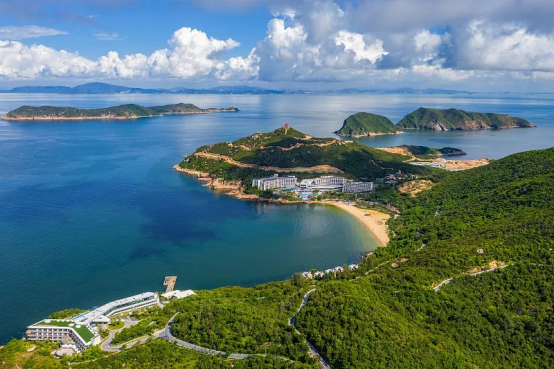
Dong'ao Island has been an important node of the Maritime Silk Road and a coastal defense stronghold in the Pearl River Estuary since ancient times. During the Ming and Qing dynasties, it was the core coastal defense fortress of the Wanshan Islands, retaining a large number of precious historical relics. Dong'ao Gun Emplacement Fortress, first built in the 7th year of the Yongzheng reign of the Qing Dynasty (1729), is an important coastal defense military facility in the Pearl River Estuary in the Qing Dynasty, consisting of city walls, artillery batteries and beacon towers, which are still well preserved today. It witnessed the history of resisting foreign enemies and guarding the coastal territory in the Pearl River Estuary in the Qing Dynasty. The island also retains the customs site from the Guangxu reign of the Qing Dynasty, which is an important witness to China's foreign trade and customs history in modern times. The island is surrounded by mountains and sea, with three high-quality beaches: Nansha Bay, Dazhu Bay and Xiaozhu Bay. Among them, Nansha Bay is known as the "Diamond Beach", one of the best-quality beaches in the Pearl River Delta. Today, Dong'ao Island deeply explores the prehistoric marine culture, coastal defense culture of the Ming and Qing dynasties, and Maritime Silk Road culture, perfectly integrating history and culture with coastal vacation, and becoming a well-known island resort in the Guangdong-Hong Kong-Macao Greater Bay Area.
7. Tangjiawan Ancient Town
Tangjiawan Ancient Town is a place where numerous celebrities emerged in modern Chinese history. It gave birth to a large number of figures who influenced China's modernization process, including Rong Hong, the father of Chinese overseas students, Tang Shaoyi, the first Prime Minister of the Republic of China, Tang Guo'an, the first president of Tsinghua University, Tang Tingshu, a famous modern industrialist, and Rong Guotuan, China's first world champion, earning it the reputation of "the No.1 Village of Modern Celebrities in China". The core area of the ancient town, Shanfang Road, retains a large number of Lingnan residential buildings from the late Qing Dynasty and the early Republic of China. Grey bricks and tiles, sliding wooden gates, and Manchurian windows complement the Western-style watchtowers and foreign-style houses, forming a unique Chinese-Western architectural style, which is a model of modern architecture in Lingnan. Gongle Garden in the ancient town, first built in 1910 by Tang Shaoyi, is the only modern private garden in the Lingnan region. It integrates the style characteristics of Jiangnan gardens, Western gardens and Lingnan gardens, and retains a large number of celebrity manuscripts and historical relics. Today, Tangjiawan Ancient Town is the core exhibition window of Zhuhai's modern history and culture, as well as an important famous historical and cultural town in the Guangdong-Hong Kong-Macao Greater Bay Area.
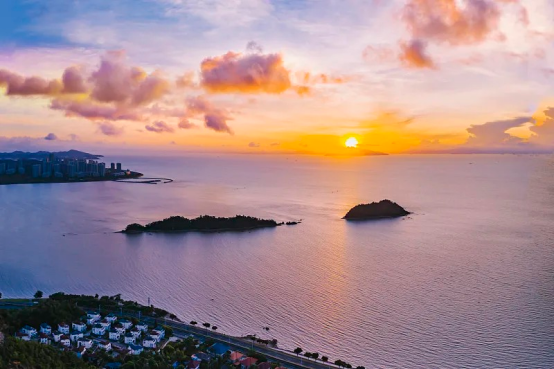
8. Guishan Island
In 1950, the Battle to Liberate Wanshan Islands broke out here, which was the first large-scale naval battle after the establishment of the People's Liberation Army Navy. It broke the maritime blockade of the Pearl River Estuary by the Kuomintang army and laid an important foundation for the coastal defense construction of New China. Chairman Mao Zedong personally wrote an inscription for the battle: "We must build a powerful navy". The island retains red relics such as the Guishan Warship Martyrs Monument, Guishan Warship Landing Site and Wanshan Naval Battle Memorial Hall, which is a patriotic education base in Guangdong Province and an important red culture education position in the Guangdong-Hong Kong-Macao Greater Bay Area. In addition to its profound red cultural heritage, Guishan Island also has a long historical context. It is the sea area where Wen Tianxiang passed through and wrote Passing Lingding Ocean in the late Southern Song Dynasty. The Wen Tianxiang Cultural Square is built on the island to inherit the patriotic spirit. During the Ming and Qing dynasties, it was a coastal defense stronghold in the Pearl River Estuary and an important node of the Maritime Silk Road, retaining historical relics such as beacon towers and customs sites. Today, Guishan Island perfectly integrates red culture, historical context and island vacation, becoming a unique island cultural and tourism destination in the Pearl River Estuary.