English
 French
 Spanish
 Russian
 Arabic
 Italy
Italy
1. Sun Yat-sen Mausoleum
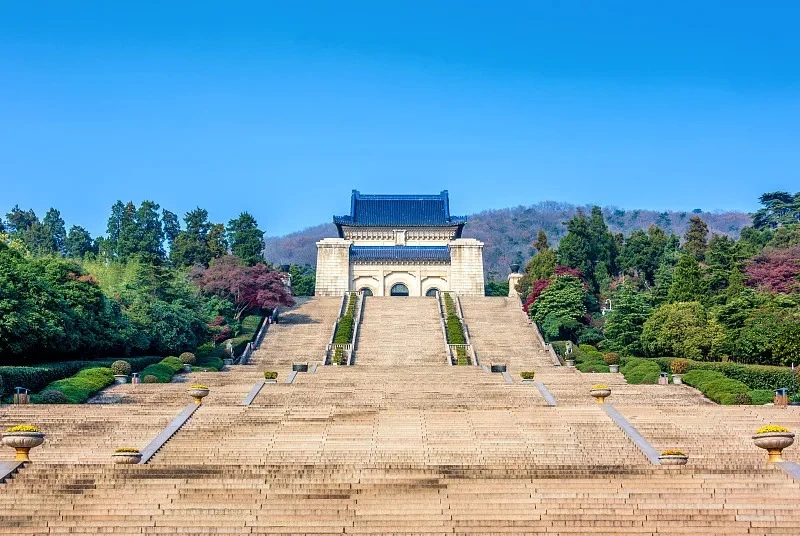
Sun Yat-sen Mausoleum is located at the southern foot of Purple Mountain in Xuanwu District, Nanjing. It is the mausoleum of Dr. Sun Yat-sen, the great pioneer of the democratic revolution. The entire complex is built according to the mountain terrain, arranged along the central axis from south to north, with a plane in the shape of a "free bell", taking the meaning of "wooden bell warning the world". The mausoleum buildings are axisymmetric, from the Bo'ai Archway, the tomb path, the mausoleum gate, the stele pavilion to the sacrificial hall, there are 392 stone steps and 10 platforms, all constructed with white granite, covered with blue glazed tiles. The Chinese-Western combined architectural style not only inherits the traditional Chinese ritual system, but also integrates modern architectural features, known as "the first mausoleum in the history of modern Chinese architecture".
During the process of climbing the steps, looking back, you can see the vision gradually widening. After reaching the top of the sacrificial hall, you can overlook the magnificent scenery of the entire Zhongshan Scenic Area, with the plain in front and the green peaks behind, full of momentum. Sun Yat-sen Mausoleum has different styles in different seasons: the forests are lush in spring, the thick shade covers the sun in summer, the forests are dyed in autumn, and the snow covers the earth in winter. No matter when you come, you can feel this solemn and beautiful atmosphere. It is not only a holy place to commemorate the great man, but also a landmark scenic spot where Nanjing's humanity and nature blend.
2. Confucius Temple & Qinhuai River Scenic Area
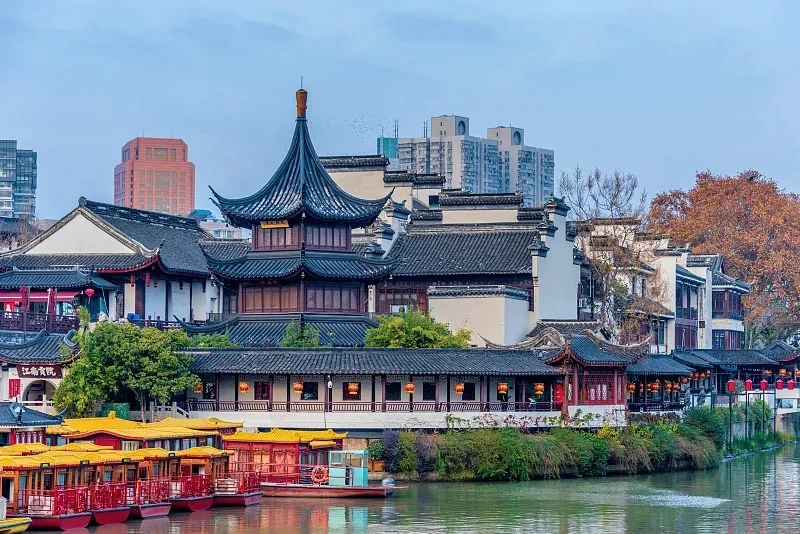
The Confucius Temple & Qinhuai River Scenic Area is located in Qinhuai District, Nanjing. It is the core area of the "Ten-mile Qinhuai", and also one of the four major Confucian temples in China. It was built in the 3rd year of Xiankang in the Eastern Jin Dynasty, and expanded into a Confucian Temple in the 1st year of Jingyou in the Northern Song Dynasty to worship Confucius. It consists of three major architectural complexes: the Confucian Temple, the Imperial Academy, and the Jiangnan Imperial Examination Center, serving as the core carrier of Jinling's 2,000-year cultural context. As the mother river of Nanjing, the Qinhuai River has nurtured the ancient city's prosperity for thousands of years. It was once the prosperous place of the Six Dynasties, where noble families lived by the river and literati gathered here, leaving countless poems that have been recited through the ages.
Night is the most touching moment of this area. When night falls, the red lanterns on both sides of the river light up one after another, and painted boats sail slowly on the river. Amid the sound of oars and flickering lights, the outline of ancient buildings looks particularly soft, just like traveling back to the prosperous Jinling of a thousand years ago. During the day, it is full of urban market vitality. The ancient street is lined with specialty shops and snack stalls, and historic sites such as Wuyi Alley and Jiangnan Imperial Examination Center hide profound historical heritage. After shopping, you can take a painted boat for a night tour, feeling the thousand-year artistic conception of "mooring on the Qinhuai River at night" in the flowing lights and shadows.
3. Nanjing Presidential Palace
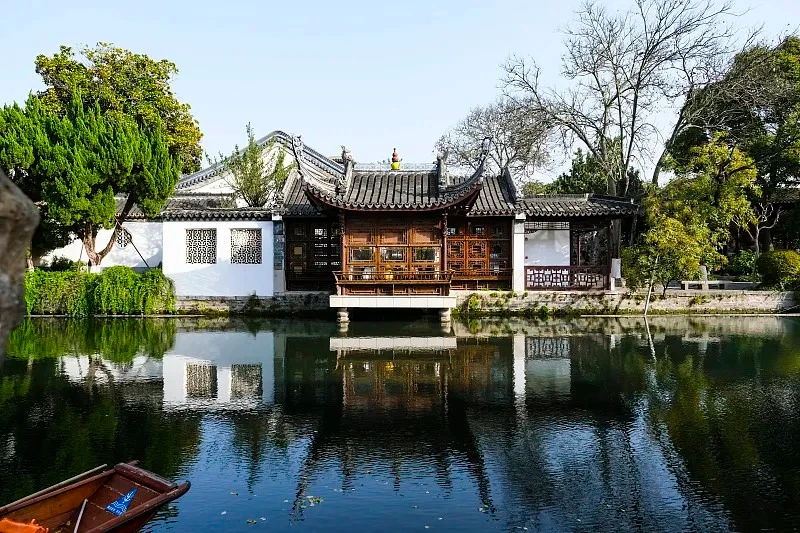
Nanjing Presidential Palace is located at No. 292 Changjiang Road, Xuanwu District, Nanjing. It is the largest and best-preserved complex of modern architectural relics in China, with a history of more than 600 years. This place has experienced the changes of multiple dynasties: it was the Marquis of Guide's Mansion and Han King's Mansion in the Ming Dynasty, the Liangjiang Governor's Office in the Qing Dynasty, where Emperor Kangxi and Emperor Qianlong used it as their temporary palace during their southern tours. During the Taiping Heavenly Kingdom period, it was the Heavenly Dynasty Palace of Hong Xiuquan. In the Republic of China period, it became the office of the Provisional President of the Republic of China and the National Government, witnessing numerous major events in modern history.
Today, the Presidential Palace has become the Museum of Modern Chinese History, divided into three visiting areas: central, eastern and western. The central axis is the core office area, the western area is Dr. Sun Yat-sen's provisional president's office and Xuyuan Garden, a Jiangnan-style garden, and the eastern area is the former site of the Executive Yuan. Walking through this complex, you can not only see the gentle and beautiful Jiangnan gardens, but also feel the architectural characteristics of the western learning spreading to the east in modern times. As the old saying goes: "One Presidential Palace, half of modern Chinese history". Every brick and tile here is telling the vicissitudes of modern China.
4. Ming Xiaoling Mausoleum
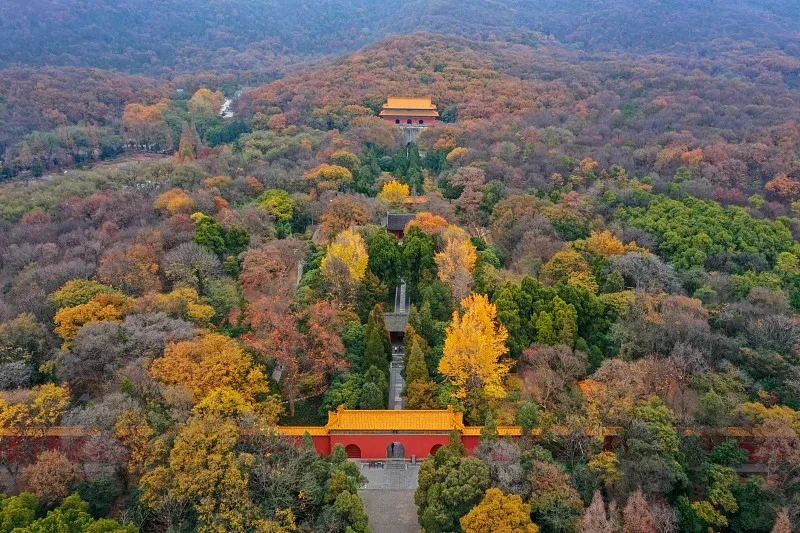
Ming Xiaoling Mausoleum is located at the Dulongfu Wanzhu Peak on the southern foot of Purple Mountain in Xuanwu District, Nanjing. It is the joint mausoleum of Zhu Yuanzhang, the founding emperor of the Ming Dynasty, and Empress Ma. As a World Cultural Heritage, it is a model of imperial mausoleums of the Ming and Qing dynasties, and directly influenced the shape of imperial mausoleums of the Ming and Qing dynasties after that. The entire mausoleum was built in 1381 and was not fully completed until 32 years later. The pattern of building according to the mountain perfectly integrates cultural buildings with natural landscapes, created the imperial mausoleum system of "front court and back bedroom", and has the reputation of "the first imperial mausoleum of the Ming and Qing dynasties".
The Shixiang Road of Ming Xiaoling Mausoleum is known as "the most beautiful 600 meters in Nanjing". On both sides of the 615-meter-long road, there are 24 stone beasts in total, including lions, xiezhi, camels, elephants, qilin and horses, each with a unique meaning. The trees beside the road change colors with the seasons. In autumn, ginkgo is golden and maple leaves are red, contrasting with the ancient stone beasts, becoming the iconic business card of Nanjing's autumn scenery. In addition, the sika deer in Changsheng Deer Garden and the magnificent view of Fangcheng Minglou make this 600-year-old imperial mausoleum full of vitality and charm.
5. Xuanwu Lake Park
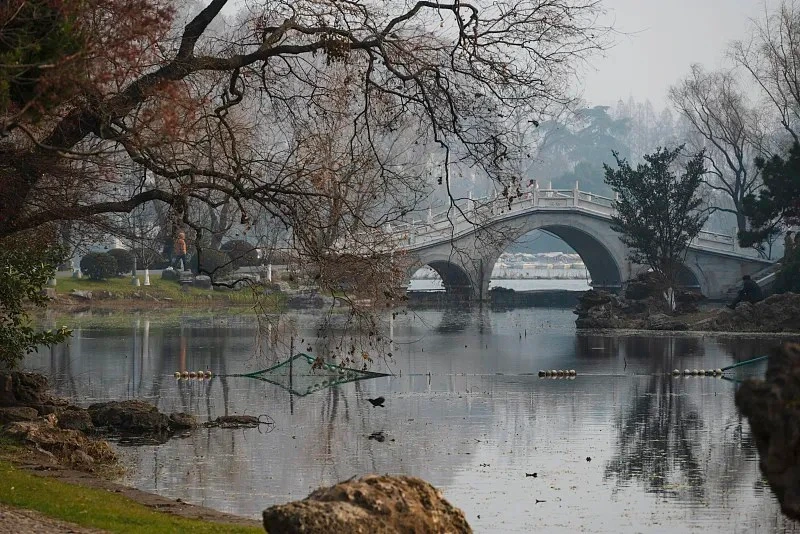
Xuanwu Lake is located at the western foot of Purple Mountain in Xuanwu District, Nanjing. It is the largest royal garden lake in China and the only surviving Jiangnan royal garden, known as the "Pearl of Jinling". This lake was originally named Sangbo. As early as the Six Dynasties period, it was already a royal garden. In the Ming Dynasty, it was the national archive for storing yellow registers. Today, it is a free urban park with a total area of 5.13 square kilometers, which is even larger than West Lake in Hangzhou. It is the favorite city backyard of Nanjing people.
Xuanwu Lake consists of five continents: Huanzhou, Yingzhou, Liangzhou, Cuizhou and Lingzhou, connected by bridges and dikes, with changing scenery step by step. The eight scenic spots such as "Smoke willows of Huanzhou, Cherry blossoms of Yingzhou, Chrysanthemums of Liangzhou, Mountain mist of Lingzhou" each have their own charm. In spring, the cherry blossoms in Yingzhou are like clouds and rosy clouds; in summer, the lotus flowers on the lake stand gracefully; in autumn, the chrysanthemums in Liangzhou are in full bloom; in winter, the plum blossoms are fragrant. There are different beautiful scenery in four seasons. Here, you can walk around the lake, or take a boat on the lake, watching the greenery of Purple Mountain and the city skyline in the same frame, feeling the unique comfort of the integration of mountains, rivers, cities and forests.
6. Jinling Salted Duck
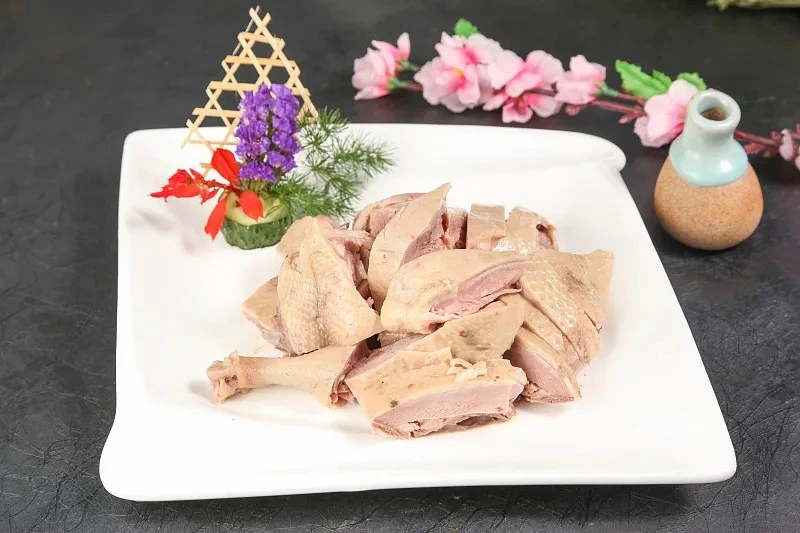
Salted duck is the most representative food in Nanjing, also known as Jinling salted duck. It has a long history of more than 2,500 years. As early as the Spring and Autumn Period and Warring States Period, people in Nanjing already had the habit of eating ducks. In the Ming and Qing dynasties, this delicacy became a royal tribute. Today, its production technique has been selected into the Intangible Cultural Heritage of Jiangsu Province, and Nanjing has won the reputation of "Duck Capital" because of this delicacy.
The authentic salted duck has a simple production method: after marinating with stir-fried salt and spices, it is slowly soaked in old brine, and finally stewed at low temperature. The finished product has white skin and red meat, tight and elastic meat, fat but not greasy, with a faint herb fragrance in the salty taste. Cold food can better highlight its original flavor. The osmanthus salted duck around the Mid-Autumn Festival is particularly famous, with a faint osmanthus fragrance. It is an essential delicacy on Nanjing people's dining table and also a must-buy souvenir for tourists.
7. Duck Blood Vermicelli Soup
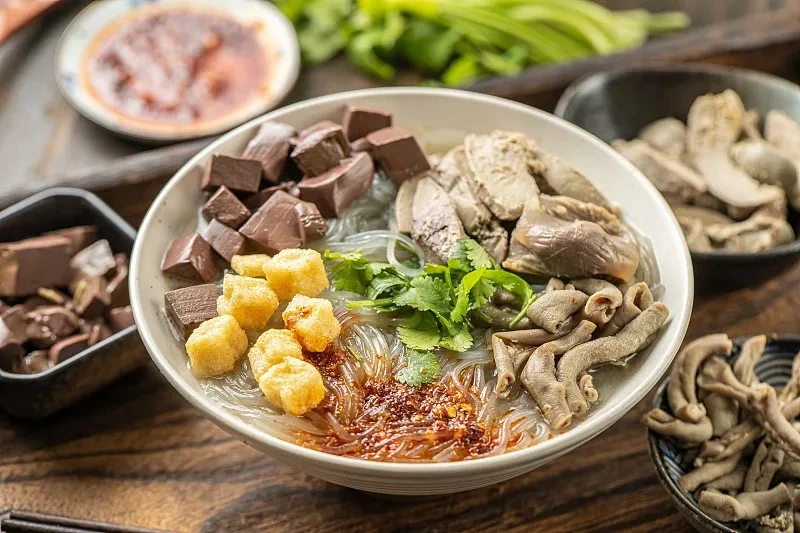
Duck blood vermicelli soup is the iconic street food in Nanjing. As a representative of Jinling snacks, it is a vivid epitome of Nanjing's duck food culture. Its earliest prototype can be traced back to the Republic of China period. At first, poor people cooked the leftover parts of ducks with vermicelli together, but unexpectedly, they created an amazing delicacy. Today, it has become a national snack popular all over the country.
The essence of a bowl of authentic duck blood vermicelli soup lies in the word "fresh". The soup base needs to be slowly boiled with duck skeletons for several hours, making the soup clear and mellow. The ingredients are even richer: duck blood as tender as tofu, crisp duck intestines, soft duck liver, with chewy sweet potato vermicelli, which absorbs the delicious soup. Sprinkle with coriander and scallions, take a bite, the mellow warmth spreads from the stomach. This small bowl of soup hides the most authentic market vitality of Nanjing city.
8. Beef Pot Stickers
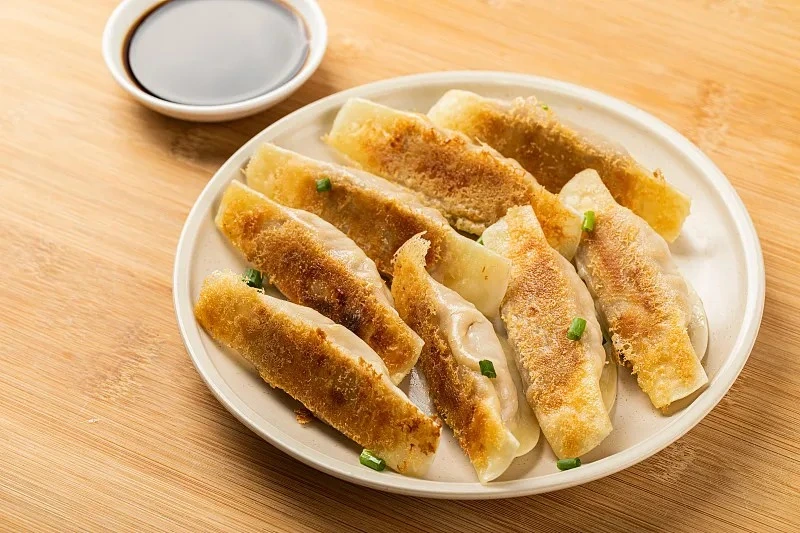
Beef pot stickers are traditional snacks in Nanjing, and also one of the Eight Qinhuai Specialties. They were popular in the streets of Nanjing as early as the late Qing Dynasty and early Republic of China. Today, they are the standard on Nanjing people's breakfast table, deeply loved by locals and tourists. This snack is shaped like a golden crescent, with a unique Nanjing flavor, which is completely different from the pot stickers in the north.
The authentic Nanjing beef pot stickers pay attention to the feature of "three sides yellow": the bottom is fried crispy and golden, the dough on both sides is flexible, and the top is soft and white. The filling selects yellow beef with fat and lean, seasoned with skin jelly. During the frying process, the skin jelly melts into delicious soup. When you bite it open, the hot soup bursts in your mouth, the beef's fresh fragrance is mixed with a little sweet and salty taste, crispy outside and tender inside, full of stuffing and juice. Dip it in vinegar and chili oil, take a bite, the layers are rich, making people have an endless aftertaste.
9. Nanjing Yun Brocade
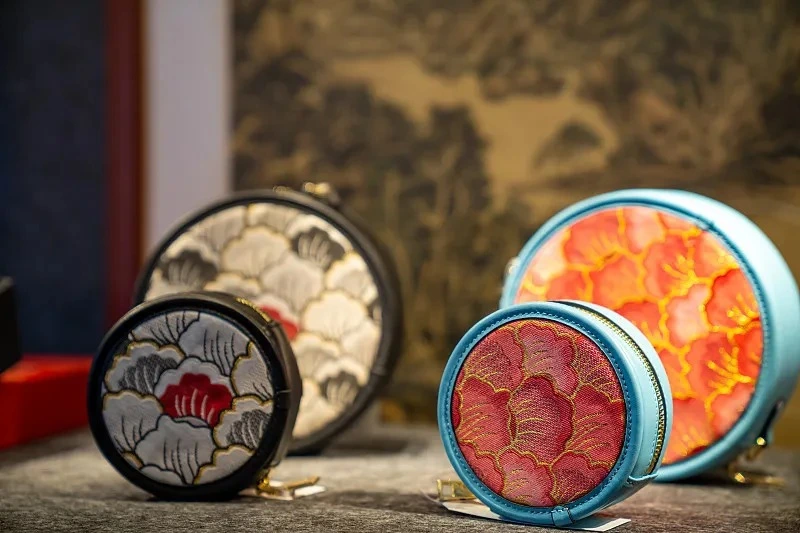
Nanjing Yun Brocade is a traditional Chinese silk craft, together with Chengdu Shu Brocade, Suzhou Song Brocade and Guangxi Zhuang Brocade, they are known as "China's Four Famous Brocades". Its weaving technique is a national intangible cultural heritage, and even a human intangible cultural heritage. It has the reputation of "an inch of brocade is an inch of gold". In ancient times, it was a royal tribute, specially used for emperor's dragon robes and queen's phoenix clothes.
The production process of Yun Brocade is extremely complex. It requires the use of traditional Dahualu wooden looms, with two workers cooperating with each other: one pulls the warp on the top, and the other wefts the weft below, all operated by hand. Even experienced masters can only weave 5-6 centimeters a day. It has rich color matching and exquisite materials, and even uses gold thread and peacock feather thread to weave. The woven patterns are as gorgeous as the clouds in the sky. Until now, this ancient craft cannot be completely replaced by machines, and it is a living fossil in the history of Chinese brocade craft.