
 English
 French
 Spanish
 Russian
 Arabic
 Italy
Italy
China's cultural heritage is a tangible testament to the enduring continuity of Chinese civilization, a constellation of cultural landmarks scattered across the Chinese land, and a cultural treasure shared by all humanity. As of 2024, China has had 57 World Heritage sites inscribed on the World Heritage List, including 39 cultural heritage sites and 4 mixed natural and cultural heritage sites, ranking among the world's highest. These heritage sites, preserved through millennia of storms, not only document the complete developmental trajectory of Chinese civilization from its origins to its zenith but also carry the spiritual genes, aesthetic pursuits, and collective memory of the Chinese nation. They serve as a vital source of cultural confidence and a core window for the world to understand China.
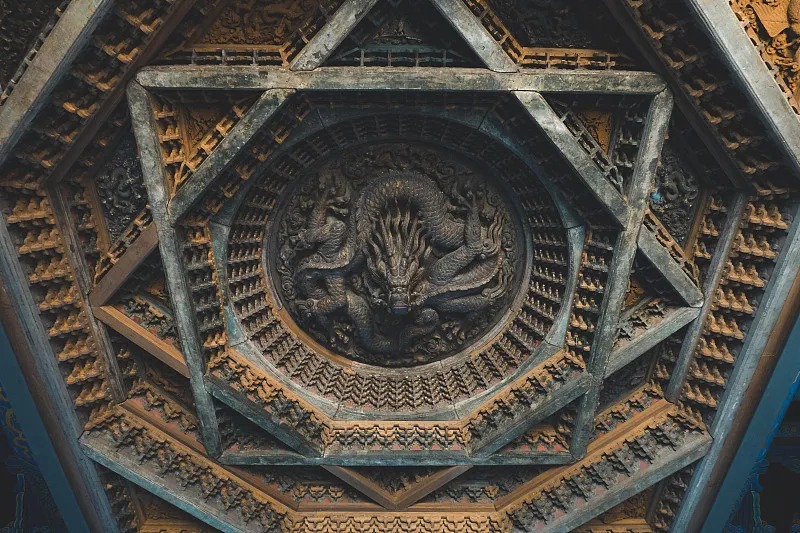
I. Historical Witness to the Continuation of Civilization
Among the four great ancient civilizations of the world, only Chinese civilization has endured uninterrupted for over five thousand years, remaining continuous and passed down through generations. The cultural heritage scattered across China's vast land serves as the most authentic, direct, and complete physical testament to this remarkable journey. According to UNESCO's definition, cultural heritage includes not only tangible elements such as ancient architecture, archaeological sites, and grotto temples, but also intangible elements like traditional crafts and folk customs. China's cultural heritage system forms a complete timeline, connecting every pivotal moment in the development of Chinese civilization and embodying its core characteristics of "diversity in unity, inclusiveness, and continuity."
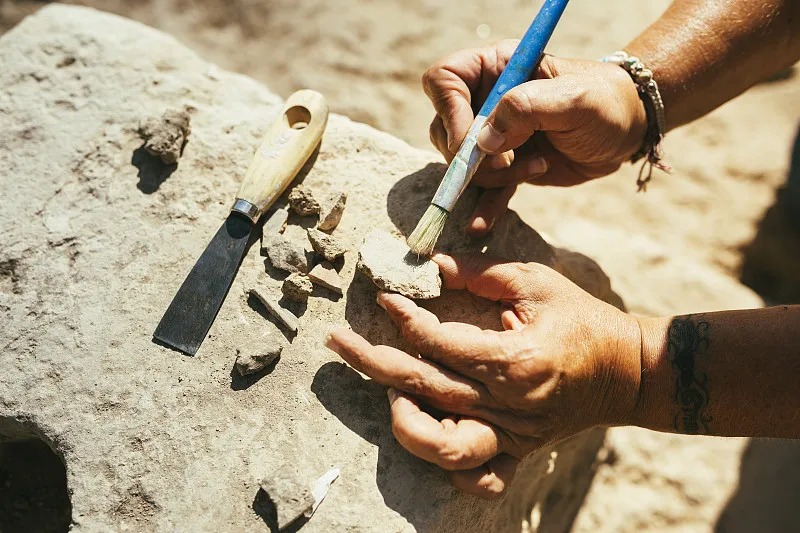
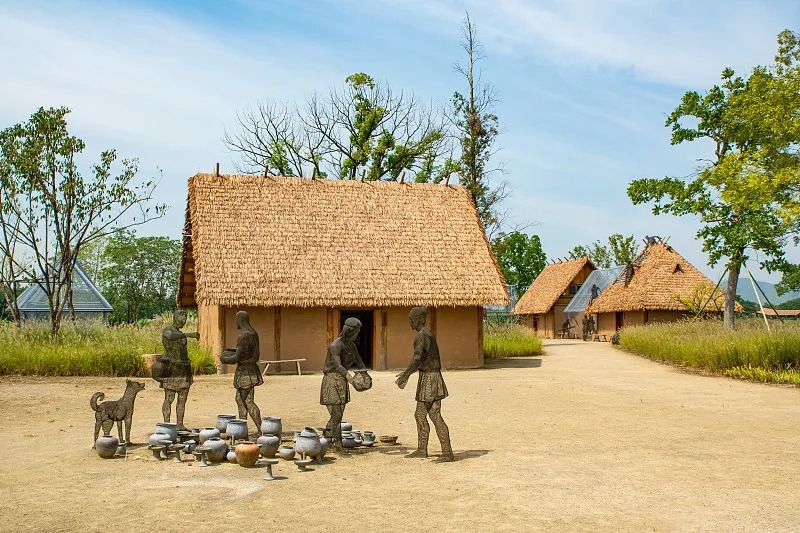
The time span of China's cultural heritage can be traced back to the Neolithic Age, over 5,000 years ago, which also marks the origin stage of Chinese civilization. The Liangzhu Ancient City Site in Hangzhou, Zhejiang Province, is the most representative cultural heritage of this period. In 2019, it was inscribed on the World Heritage List, completely rewriting the international community's understanding of Chinese civilization. Prior to this, the international academic community generally believed that Chinese civilization had only a verifiable history of over 3,000 years. However, the excavation of the Liangzhu Ancient City Site, with its intact ancient city ruins, massive water management system, and power symbols such as jade cong and divine-human-beast face patterns, proved that as early as 5,000 years ago, China had already developed mature state forms and ritual systems, earning global recognition for its 5,000-year civilization history. Sites from the Yangshao Culture, Hongshan Culture, and Longshan Culture from the same period also showcased the "starry sky" pattern of development during the origin stage of Chinese civilization through abundant unearthed artifacts.
With the development of civilization, the lineage of China's cultural heritage has become increasingly clear. The Erlitou site in Luoyang, Henan, is the capital site of the late Xia Dynasty and is hailed as "the earliest China." Here, the earliest group of bronze ritual vessels and the earliest palace city ruins of China were unearthed, confirming the existence of the Xia Dynasty recorded in historical texts and serving as a core witness to the entry of Chinese civilization into the era of dynasties. The Yin Ruins site in Anyang, Henan, is the capital site of the late Shang Dynasty. Here, the earliest mature writing system of China—the oracle bone script—was discovered. The oracle bone script is directly descended from today's Chinese characters and has been used for over three thousand years, remaining an uninterrupted core symbol of Chinese civilization and making the history of the Shang Dynasty credible. From the Zhouyuan and Fenghao sites of the Western Zhou Dynasty to the capital sites of various states during the Spring and Autumn and Warring States periods, these cultural heritages clearly document the complete journey of Chinese civilization from early states to a unified empire.
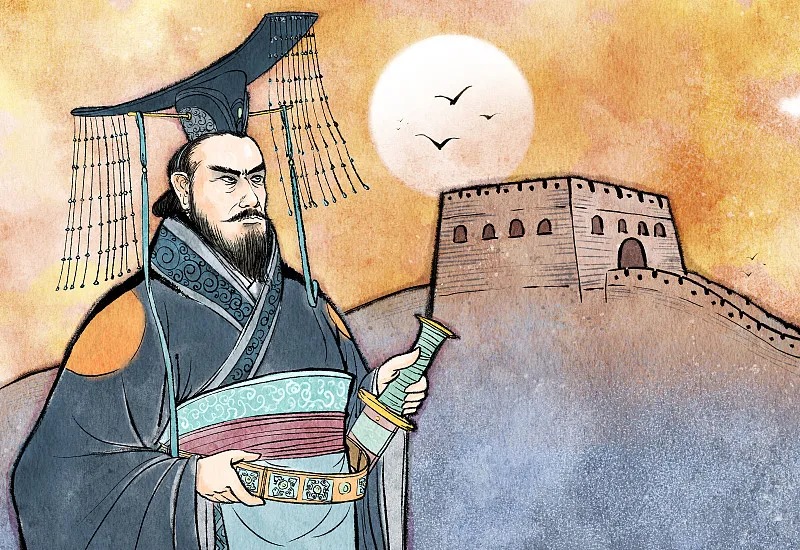
After the Qin and Han dynasties, China entered the golden age of unified empires, leaving behind a greater number, larger scale, and richer cultural heritage. From the Great Wall and the Mausoleum of the First Qin Emperor to the ruins of Chang 'an City and the Tomb of Marquis of Haihun from the Han Dynasty, to the ruins of Chang' an City and the Grand Canal from the Sui and Tang periods, the Quanzhou Port and Dengfeng's "Center of Heaven and Earth" historical architectural complex from the Song and Yuan dynasties, and the Forbidden City, Temple of Heaven, Summer Palace, and Suzhou Gardens from the Ming and Qing dynasties, these cultural heritages are like living fossils of history, allowing us to transcend millennia and intuitively touch upon the ancient people's production and life, social systems, architectural techniques, aesthetic pursuits, and spiritual world.

More noteworthy is that China's cultural heritage not only encompasses the civilizational achievements of the Han nationality but also includes the cultural treasures of various ethnic minorities, fully reflecting the characteristics of Chinese civilization as a diverse yet unified entity. The Potala Palace in Lhasa, Xizang, is the pinnacle of Tibetan-style ancient architecture, witnessing the cultural exchange and integration between Han and Tibetan ethnic groups; the Yuan Shangdu Ruins in Xilingol, Inner Mongolia, serve as core evidence of the Yuan Dynasty's grassland capital, showcasing the collision and fusion of nomadic and agrarian civilizations; the Jiaohe Ancient City in Turpan, Xinjiang, is the world's largest and oldest earthen architecture city, bearing witness to civilizational exchanges along the Silk Road; Lijiang Ancient City in Yunnan is the core carrier of Naxi culture, demonstrating the unique urban construction wisdom and cultural traditions of ethnic minorities. These cultural heritages scattered across the nation collectively prove that Chinese civilization has never been singular or closed, but rather an open civilization co-created by all ethnic groups and continuously absorbing foreign cultures.
II. Cultural Core of Representative Heritage
Every representative cultural heritage site in China is by no means merely a building or ruins, but rather embodies the profound connotations and spiritual codes of Chinese civilization, serving as concrete manifestations of national cultural characteristics. Among them, the Great Wall, the Forbidden City in Beijing, the Terracotta Army of Emperor Qin Shi Huang's Mausoleum, and the Mogao Caves in Dunhuang are the four most representative and distinctive cultural heritages that best highlight the characteristics of Chinese civilization. They respectively demonstrate the core values of China's cultural heritage from four dimensions: national spirit, ritual culture, technological proficiency, and civilizational exchange.
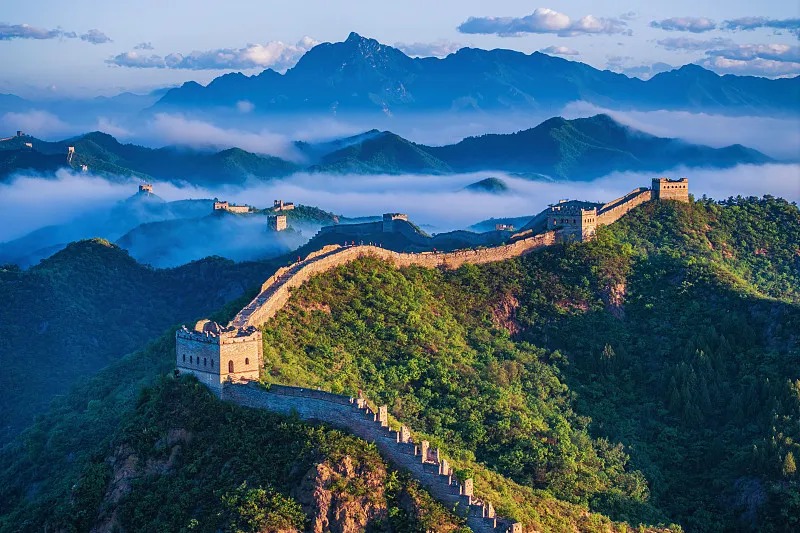
The Great Wall has long transcended its original significance as an ancient military defense structure, becoming the most recognizable spiritual symbol of the Chinese nation. Many people perceive the Great Wall as a wall stretching across the northern mountains, but in fact, it is a comprehensive military defense system that has been continuously constructed and refined over two thousand years, embodying the wisdom and perseverance of ancient Chinese ancestors. Its construction began during the Spring and Autumn and Warring States periods. After Qin unified the six states, it connected the walls of various states, forming the prototype of the "Great Wall." Subsequent dynasties, including the Han and Ming, continuously repaired and expanded it, eventually creating a Great Wall system with a total length exceeding 21,000 kilometers. Comprising walls, passes, beacon towers, fortifications, and garrison posts, it adapts to the terrain and utilizes natural defenses to maximize protection. The beacon tower system could transmit enemy intelligence from thousands of miles away to command centers within hours, representing the most advanced military communication system in the world over two thousand years ago. More importantly, the Great Wall was never a barrier to civilizational isolation but a bond for the exchange and integration of agrarian and nomadic civilizations. The tea-horse trade along the Great Wall facilitated the exchange of tea and silk from the Central Plains with horses, cattle, and sheep from the grasslands, promoting ethnic integration and interaction. In modern times, the Great Wall has become a spiritual banner for the Chinese nation to resist foreign aggression and stand united. The rallying cry in "The March of the Volunteers," "Build our new Great Wall with our flesh and blood," has awakened the patriotic sentiments of countless Chinese people, making the Great Wall a symbol of the Chinese nation's resilience and self-improvement.
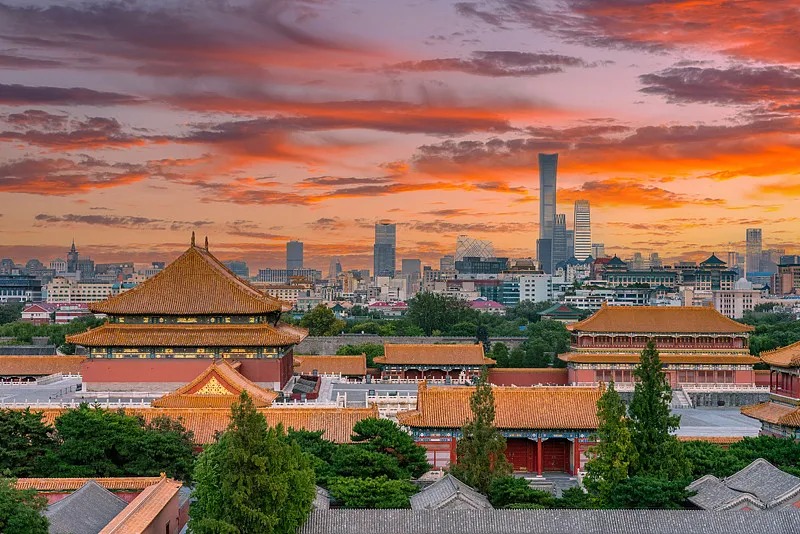
The Forbidden City in Beijing, the Purple Forbidden City, is the culmination of ancient Chinese ritual culture, architectural aesthetics, and imperial culture. It is the largest and best-preserved wooden architectural complex in the world, hailed as the "foremost of the world's five great palaces." Construction of the Forbidden City began in the fourth year of the Yongle reign of the Ming Dynasty (1406 AD) and took 14 years to complete. Over nearly five centuries, it served as the political center and power hub of China during the Ming and Qing dynasties, housing 24 emperors. Its overall layout strictly adheres to the ancient capital construction system of "front court, rear quarters, left ancestral temple, and right altar," situated at the core of Beijing's central axis, embodying the governance philosophy of "uprightness and benevolence" and the supreme authority of imperial power. The Forbidden City is divided into two main sections: the front court and rear quarters. The front court, centered around the Hall of Supreme Harmony, Hall of Central Harmony, and Hall of Preserving Harmony, was where emperors held grand ceremonies and handled state affairs. The Hall of Supreme Harmony, commonly known as the "Golden Throne Hall," is the highest-ranking wooden structure in China today, used only for major events such as imperial enthronement, weddings, longevity celebrations, and winter solstices. The rear quarters, centered around the Three Rear Palaces—Qianqing Palace, Jiaotai Hall, and Kunning Palace—along with the six eastern and western palaces, served as the living quarters for emperors and their consorts, forming the core of imperial life. Every beam, pillar, window, and tile of the Forbidden City embodies the ultimate aesthetics of ancient Chinese architecture. Its traditional mortise-and-tenon joints allow it to stand for six centuries without a single nail. The color scheme of red walls and yellow tiles, symmetrical and rigorous layout, and exquisite carved beams and painted rafters perfectly integrate the ritual and aesthetic traditions of Chinese architecture.
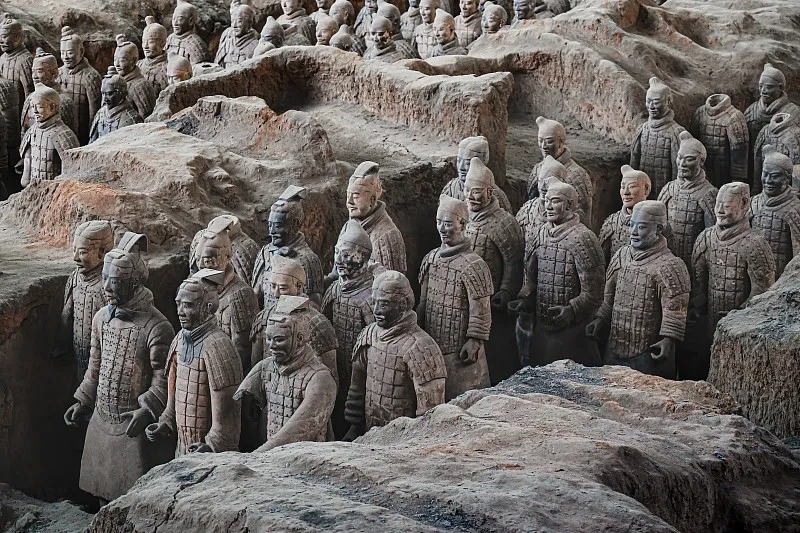
The Terracotta Army of Emperor Qin Shi Huang, hailed as the "Eighth Wonder of the World," stands as the most tangible testament to Qin Dynasty civilization and one of the greatest archaeological discoveries in history. Located in Lintong, Xi 'an, Shaanxi Province, these burial pits were constructed as part of the emperor's mausoleum complex. Initiated in 221 BC and completed over 39 years, the three excavated pits cover an area exceeding 20,000 square meters, yielding over 8,000 terracotta figures, horses, and tens of thousands of bronze weapons. What truly captivates visitors is not just the awe-inspiring scale of the army but the unparalleled realism of its craftsmanship: each figure's facial features, hairstyles, attire, and expressions are meticulously detailed, with clear distinctions based on military ranks and official positions. Generals exude solemn authority, soldiers demonstrate unwavering determination, cavalrymen exhibit agile movements, and archers maintain focused precision, perfectly recreating the Qin army's tactical formations and troop dynamics. The bronze swords unearthed here remain razor-sharp after two millennia, their chrome-plated rust-proof coating—a technology mastered by Western nations only in modern times—evidencing the Qin Dynasty's exceptional industrial expertise. Beyond reconstructing the grandeur of the Qin Empire, this archaeological marvel provides invaluable resources for global research in archaeology, history, and military science.
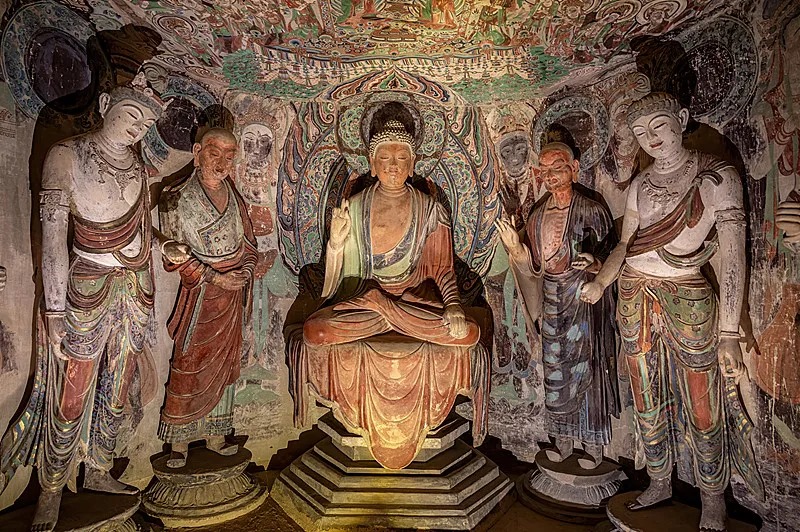
The Mogao Caves in Dunhuang represent the pinnacle of cultural exchange along the Silk Road and stand as the world's largest and most comprehensive Buddhist art sanctuary. Located on the eastern slopes of Mingsha Mountain in Dunhuang, Gansu Province, these caves were initially constructed during the Former Qin period of the Sixteen Kingdoms era. Through successive dynasties including the Sixteen Kingdoms, Northern Dynasties, Sui, Tang, Five Dynasties, Western Xia, and Yuan, they evolved into a sprawling grotto complex stretching over 1,600 meters north-south. Today preserving 735 caves, 45,000 square meters of murals, and 2,415 polychrome sculptures, they are hailed as "a living museum on the walls." The caves' murals and sculptures not only exhibit exceptional artistic value but also chronicle civilizational interactions along the Silk Road. Combining painting techniques and aesthetic styles from the Central Plains with cultural elements from the Western Regions, India, Persia, and even Europe, their content spans Buddhist narratives, historical events, daily life, trade activities, and musical performances. These treasures vividly reconstruct the prosperity of ancient Silk Road civilizations while embodying the Chinese civilization's open-minded spirit of inclusiveness and cultural integration.
III. Contemporary Value of Living Heritage Transmission
China's cultural heritage has never been an antique sealed in glass cabinets or an isolated archaeological site, but rather a living cultural treasure that resonates with contemporary society, holding immense contemporary value. In recent years, China has consistently adhered to the working principle of "protection first, strengthened management, value excavation, effective utilization, and bringing cultural relics to life," establishing a comprehensive cultural heritage protection system that allows millennia-old cultural heritage to continuously rejuvenate in modern times.
The cultural heritage of China is a precious treasure of the Chinese nation and a common gem of civilization for all humanity. They bear the millennia-old memories of Chinese civilization and carry the spiritual genes of the Chinese nation. In contemporary protection and inheritance, they continue to radiate an enduring vitality, safeguarding the roots and soul of the nation while contributing wisdom and strength from China to the development of world civilization.